UX Research / Product Design · Case Study
An energy giant’s first move into small business, and the research that decided it.
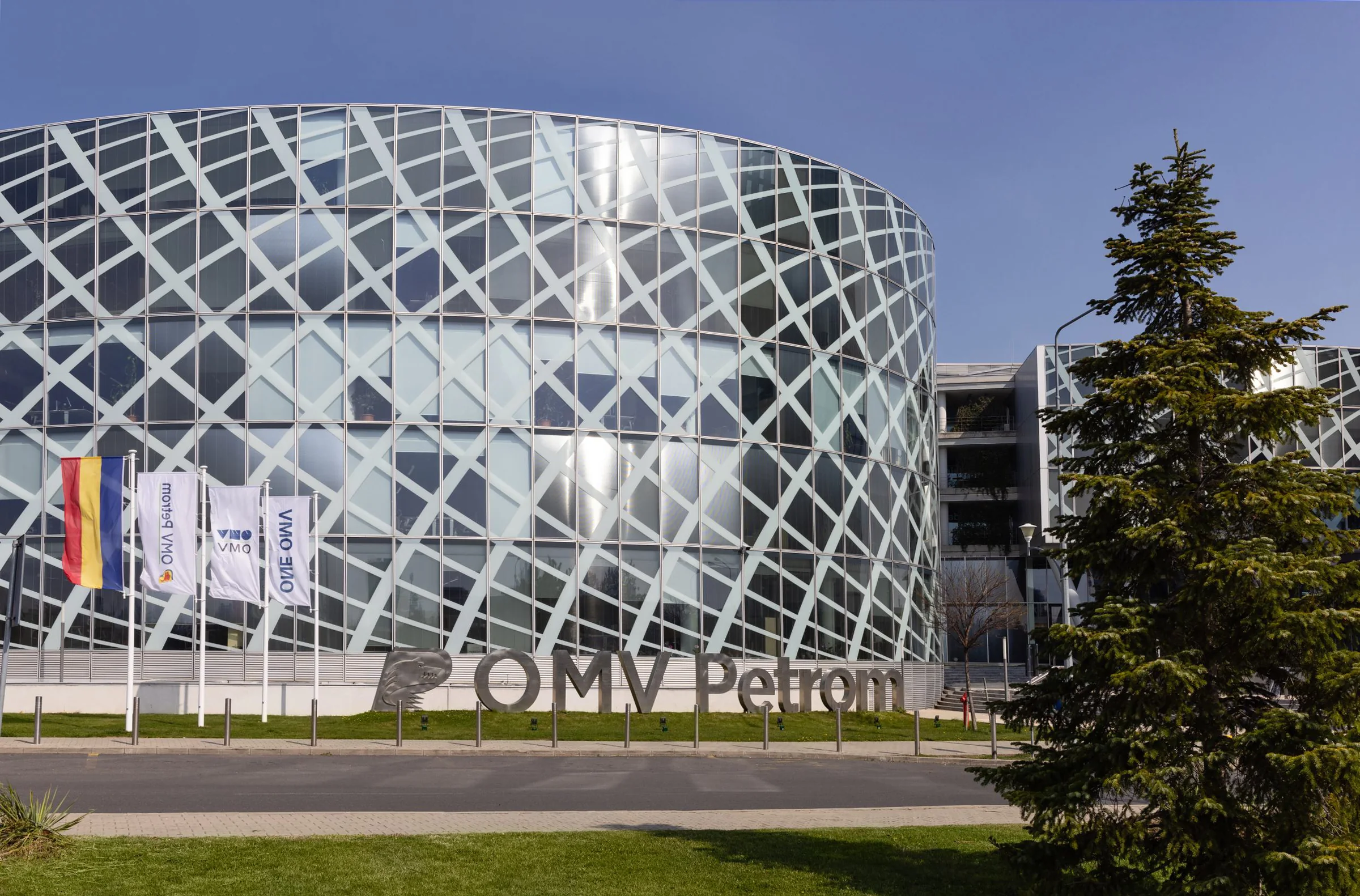
OMV Petrom, Romania’s largest energy & gas company, built its business on large industrial customers. I led the research and product design to answer a harder question first: could it serve a segment it had never served, small and medium enterprises, and if so, what would that product need to be?
The brief came in two parts, in a fixed order: first find out whether the SME market is viable for OMV Petrom at all, and only then define the product for it. So the early months of the project went into research, and the design work waited for the findings.
| My role | Research, analysis, product design, workshop facilitation, wireframing, prototyping, user testing. |
|---|---|
| Methods & tools | Competitive matrix · Lean & value-proposition canvas · stakeholder interviews · qualitative & quantitative (CATI) research · service blueprint · rapid prototyping · Sketch, Adobe XD. |
| Timeline | ~4 months, kickoff to MVP definition. |
| Context | Delivered while at Qualitance, a Romanian consultancy firm, working closely with a business analyst and teams from across OMV Petrom. |
Validate the market, then design the product.
The whole project, top to bottom. Open any step for a quick deeper read, or jump straight into the full section.
-
01
OMV Petrom, Romania’s largest energy company, built its business on large industrial customers. The brief was to find out whether it could serve small and medium enterprises, a segment it had never served, and only then define what the product should be.
-
02
The central question was market fit: is there a real, ownable opportunity for an SME energy product? I ran the work in that order so the findings of each phase could shape the next. Read the full section →
-
03
Leading suppliers offered online offers, end-to-end contracting, and self-service portals; OMV had processes built for large enterprise deals. Even though it had a handful of SME customers, the segment wasn’t completely understood inside the company. Read the full section →
-
04
Price opened every conversation, and then trust, predictability, bundled services, and digital self-service kept surfacing behind it. One B&B owner offered to pay more for a fixed monthly fee, “like a telco subscription.” Read the full section →
-
05
89% want several offers to choose between, 83% need a trustworthy supplier, 72% want a customer portal, 71% want extra services bundled with the energy supply. The product had to be trustworthy, flexible, bundled, and digital. Read the full section →
-
06
Thousands of small customers would overwhelm systems designed for enterprise deals. I mapped OMV’s processes end to end as a service blueprint, and weeks of workshops with the affected departments produced the design of an internal platform to carry the new customer base. Read the full section →
-
07
Four teams worked in 60-minute design sprints, each followed by 30 minutes of user testing with the customers present. The offer itself bent to how businesses use energy: installment plans for seasonal heating, pay-what-you-consume for manufacturers. Read the full section →
-
08
The market analysis exposed a defensible competitive edge, the subscription process got simpler and faster, and OMV Petrom saw what a company built around enterprise deals could do for a market it had never served. Read the full section →
The approach
Investigate the market before designing the product.
The central question was market fit: is there a real, ownable opportunity for an energy product aimed at SMEs? I split the work into three phases, Discovery, User Insights, and Product Definition, and ran them in that order so each phase could build on what the previous one had found.
- 1Discovery
Understand the market and the client
Energy-market research, a competitor matrix, and 18 stakeholder discussions to map the landscape, the company’s constraints, and the real opportunity.
- 2User Insights
Hear the customer, then quantify it
30+ deep-dive interviews uncovered the real pain and resolved the SME label into three profiles; a 100-company phone study validated it at scale.
- 3Product Definition
Turn the findings into a product
A two-day rapid-prototyping workshop with customers on site, and a working prototype of the SME energy offer.
Discovery
Mapping a market the client knew only from the top down.
Discovery had five objectives: understand the Romanian energy market, understand how energy companies operate here and across Europe, clarify the client’s expectations, identify the target audience, and prepare the User Insights phase.
Energy-market research
I started by building a working knowledge of the market: laws, regulations, common practices, recurring issues, the major players, and energy-related litigation. It gave the project a solid foundation and let me hold credible, deeper conversations with the subject-matter experts who came next.
Competitor analysis
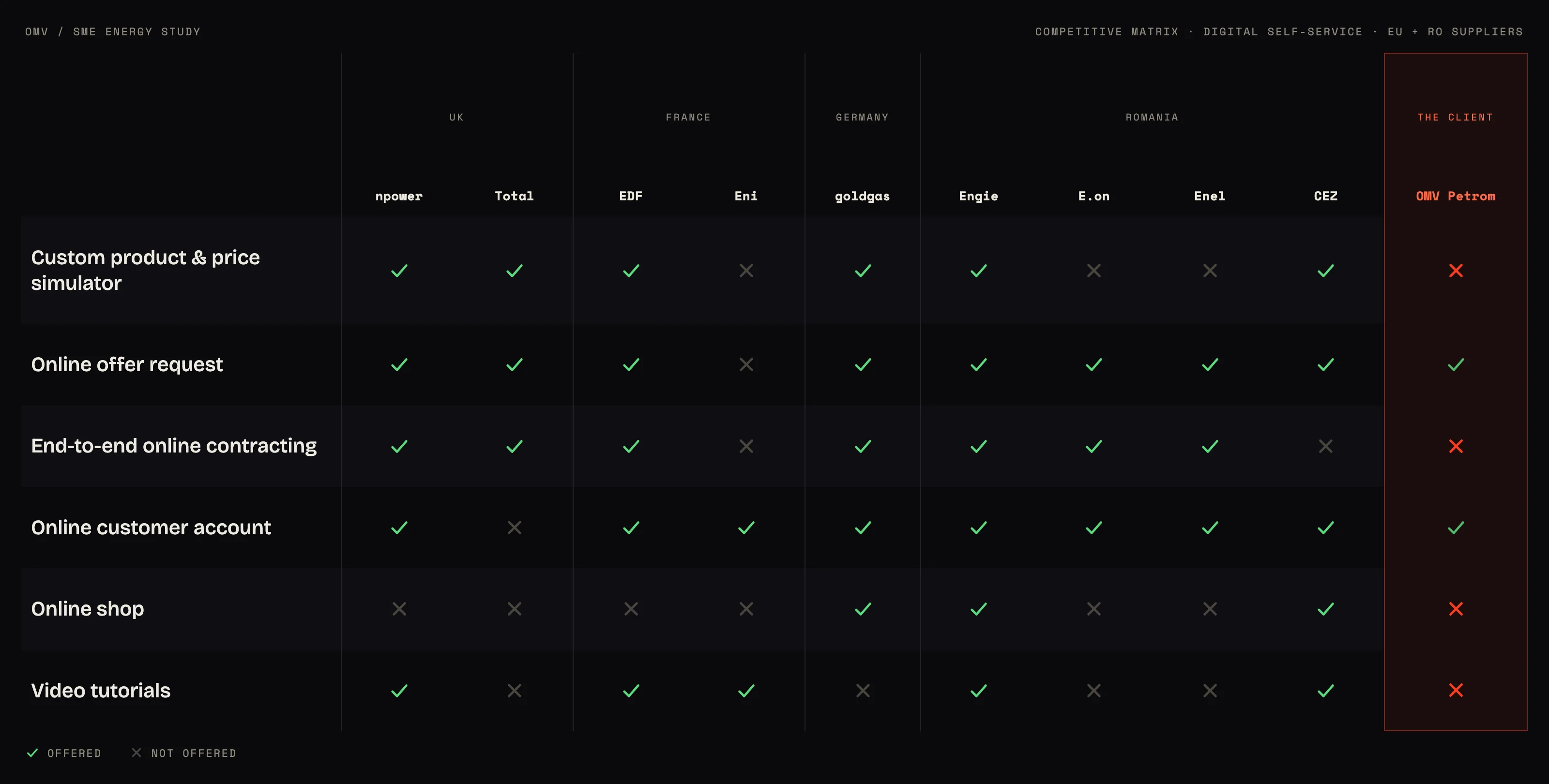
I built a competitive matrix across the major suppliers operating in Romania and Europe, comparing how each handled the things a customer actually touches: getting an offer, contracting, managing an account, and self-service. The gap showed on every row:
What leading suppliers offered
- Custom product & price configuration
- Online offer requests
- End-to-end online contracting
- Self-service customer accounts & portals
Where OMV stood at kickoff
- Processes built for large enterprise deals
- Little to no digital self-service
- Manual, relationship-led contracting
- No SME-facing product to speak of
Stakeholder interviews
Across 18 individual and joint discussions, I gathered perspective from the people who run the business, the CEO, the Head of Innovation, IT, Sales, and Marketing, to surface internal strengths and weaknesses, the day-to-day challenges of serving customers, and the organisation’s own read on the opportunity.
What Discovery surfaced
- The SME segment’s needs and challenges weren’t yet fully understood inside the company.
- The IT infrastructure was designed for large enterprise customers and would need adjustment.
- Existing products were tailored to large enterprises and would require real modification to fit smaller businesses.
A competitive matrix, an initial Lean Canvas draft, and the first draft of the qualitative research script, everything the next phase needed to start.
User insights
Three kinds of customer behind one label.
Qualitative research
User Insights was built on in-depth interviews with 30+ representatives from a carefully balanced mix: half were OMV Petrom’s own customers (its SME book held only a handful of clients, mostly medium-sized rather than small), half ran businesses under active contract with other suppliers. Each session was an hour or more of deep-dive discussion into their relationship with their energy supplier and what they need from one: how they choose, what problems they hit and how they resolve them, what would convince them to switch suppliers, and what services beyond energy they’d actually pay for.
“The price difference between winter and the rest of the year creates a lot of stress. I’d be willing to pay more, but on a fixed monthly fee, like a telco subscription.” B&B owner, qualitative interview
“I already have to arrange mandatory checks on my installation through separate companies. I’d gladly pay my energy supplier for that, and expect the inspection done right.” Office-building administrator, qualitative interview
“The people on the production floor could benefit from digital tools. An app feeding them live data about gas usage and installation status would help them a lot.” Sanitary-ware producer, qualitative interview
The pattern beneath the quotes: price opened every conversation, and then trust, predictability, bundled services, and digital self-service kept surfacing behind it as unmet needs.
From interviews to personas
OMV Petrom had surveyed the segment before the project started; I set that data aside until my own interviews confirmed it held up. Together they resolved the broad “SME” label into three distinct profiles, small company owners, procurement directors of medium-sized companies, and landlords managing multiple properties, which I developed into personas.
George
Small bakery owner- Goal
- Keep production running, grow the business
- Need
- 100% uptime, and less time lost to admin
- Pain
- Every hour spent on admin issues is an hour away from the bakery
“The ovens can’t stop. Everything else can wait.”
Alex
Landlord- Goal
- Manage multiple properties with minimal hassle
- Need
- One efficient way to handle contracts across properties
- Pain
- Contracts are in his name, so every utility issue lands on him
“Every tenant problem is somehow my problem.”
Maria
Procurement director- Goal
- Best price and terms, renegotiated every year
- Need
- Backup supply and flexibility to consume at her own pace
- Pain
- Unannounced supply interruptions cause real financial losses
“An hour without power costs more than a year of fees.”
George, Alex, and Maria are composite personas, built from the interviews and the validated survey data.
Quantitative validation
A hundred companies on the phone.
To make sure the qualitative findings weren’t anecdotes, I validated them with a quantitative study: 100+ companies contacted by phone (CATI) against a structured question set covering how they search for suppliers, their selection criteria, the services they’d want bundled, the problems they’ve hit, and what an ideal supplier relationship looks like.
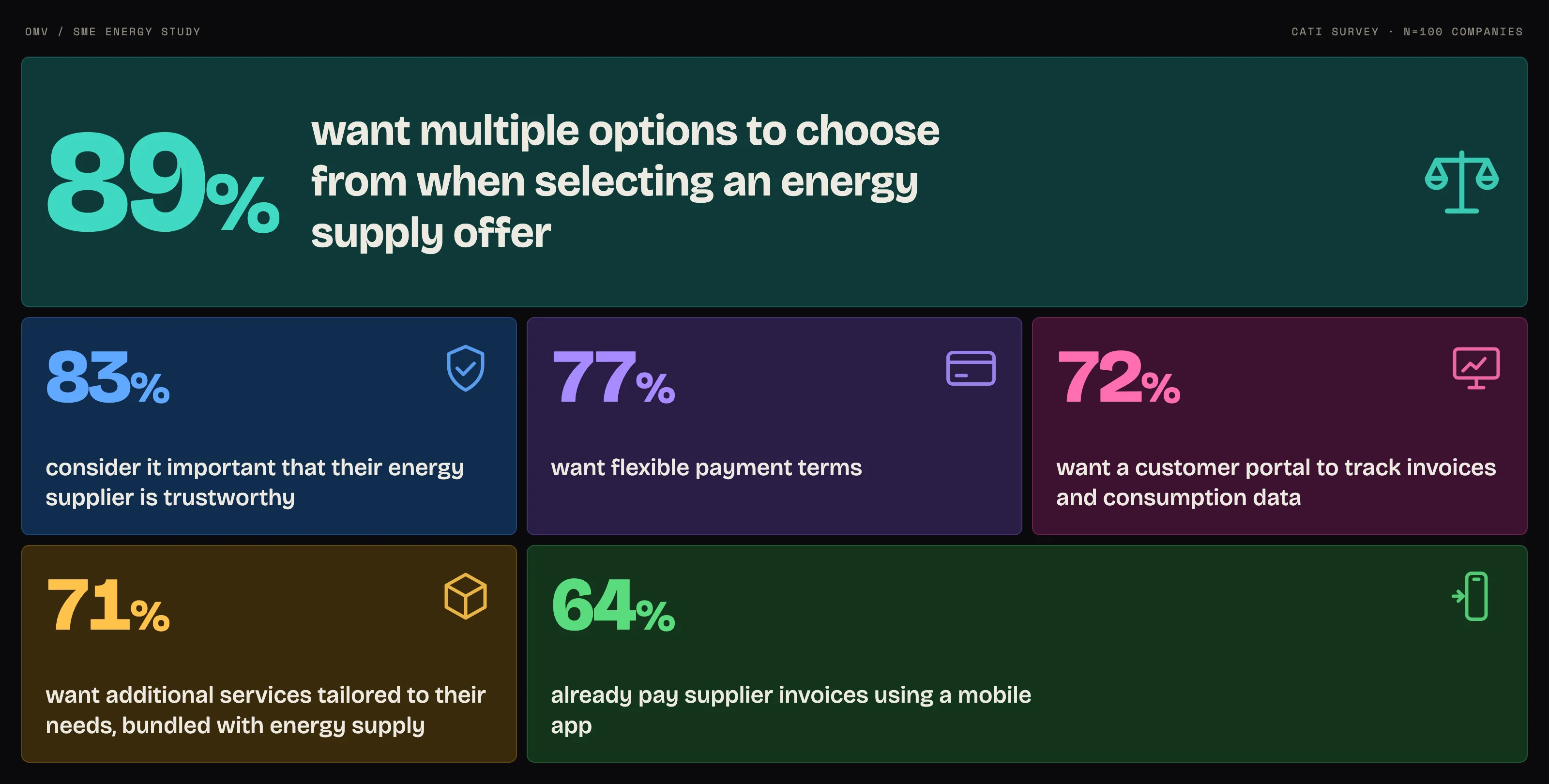
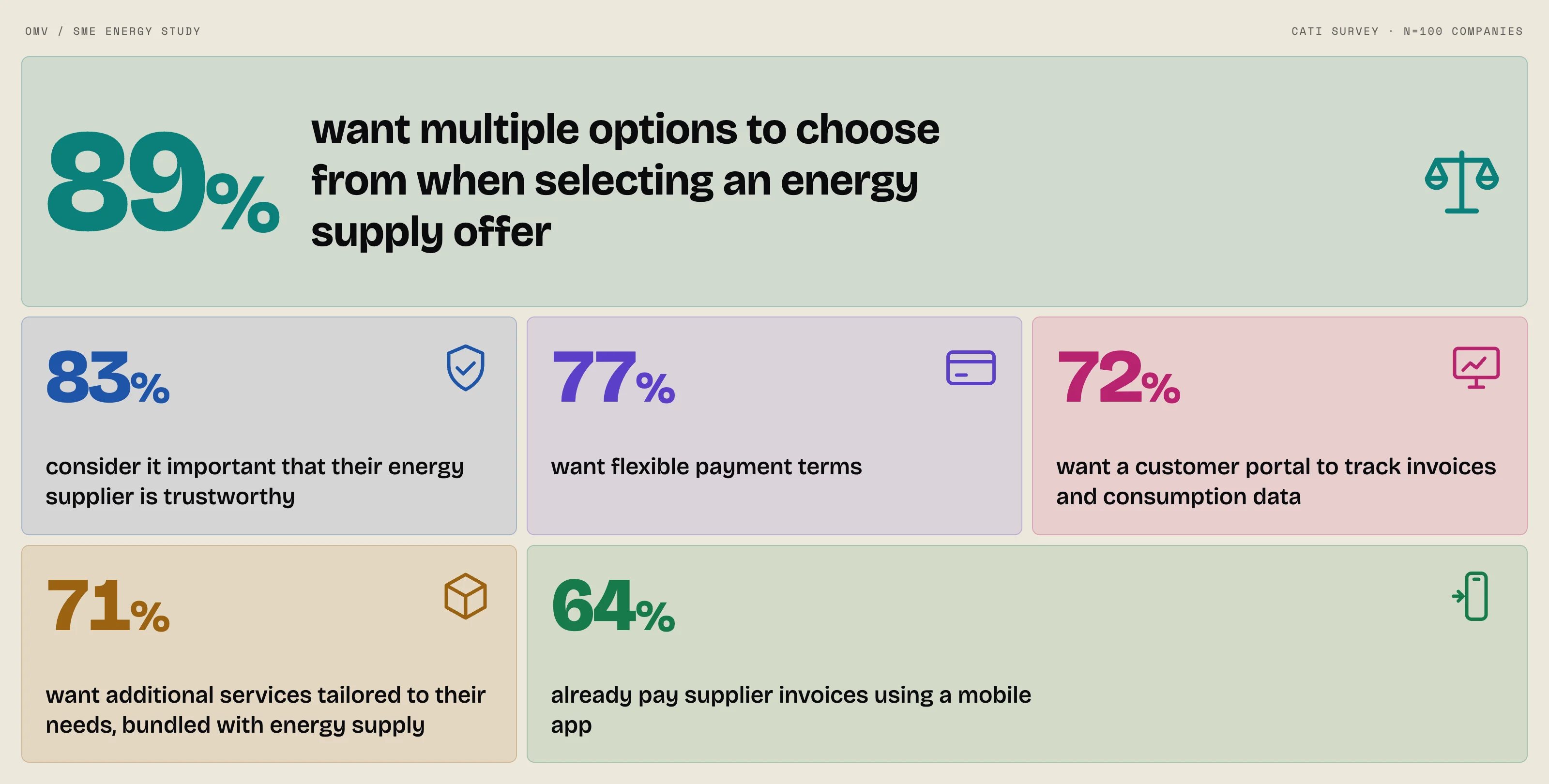
The numbers also carried a useful warning: 72% called an online platform a key criterion when choosing a supplier, yet only 44% said they would actually use one. Most respondents judge the market through word of mouth (44%) or supplier websites (35%). Taken together, the product had to be trustworthy, flexible, bundled, and digital.
The internal platform
What thousands of new small customers meant for OMV’s own systems.
Midway through the research a second problem came into focus: OMV Petrom’s CRM and internal processes were built around a small number of very large accounts, and could not absorb the volume of customers the new product would bring. Offers were assembled manually, contracts needed multiple signatures and approvals, and data moved between departments by hand.
To understand what would have to change, I mapped OMV Petrom’s existing processes end to end as a service blueprint: every step a customer takes, and every internal touchpoint that serves it. The mapping exposed the areas that needed optimisation, and we then adjusted the blueprint to the new reality the product would create: serving a large number of smaller customers.
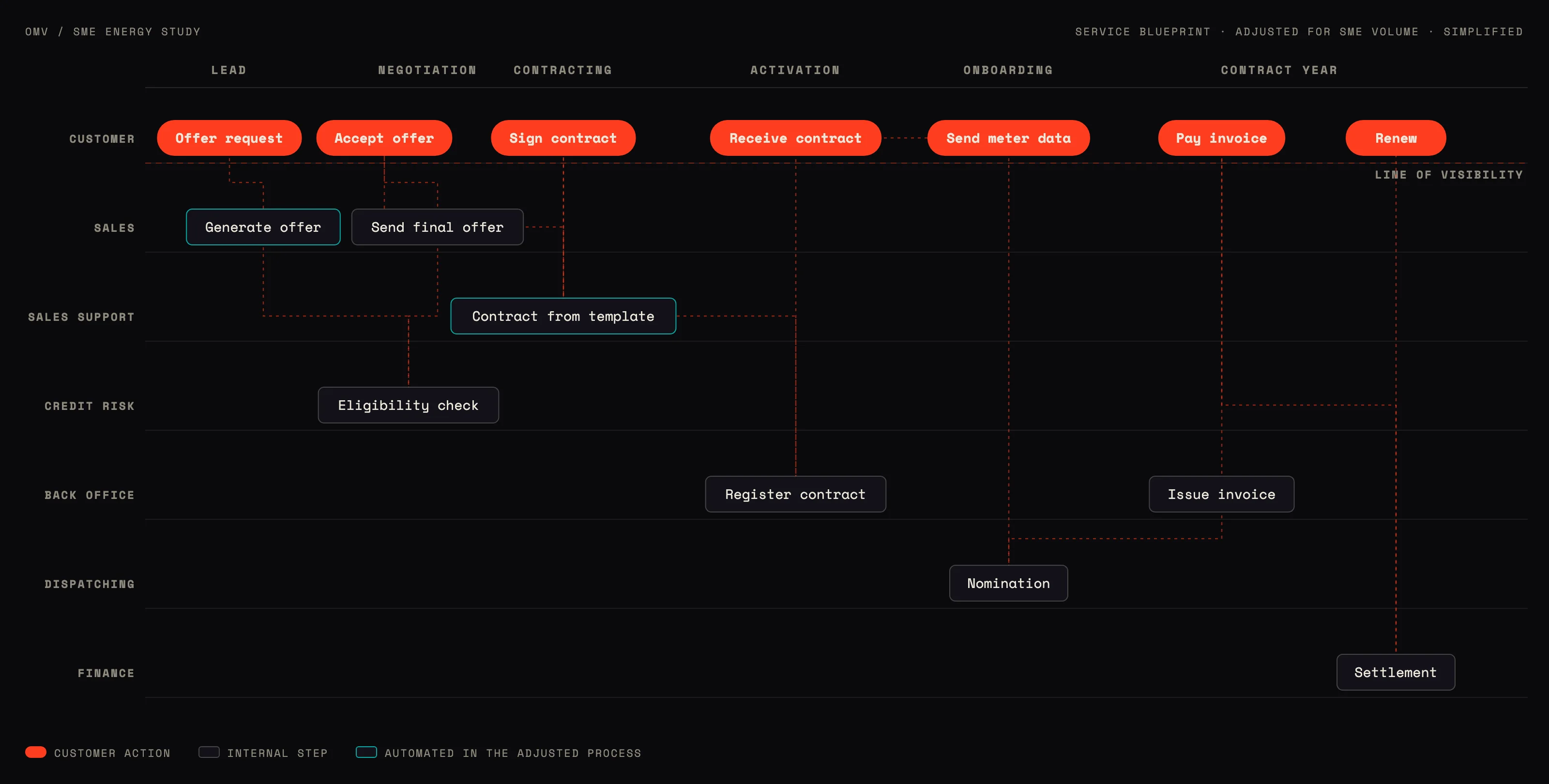
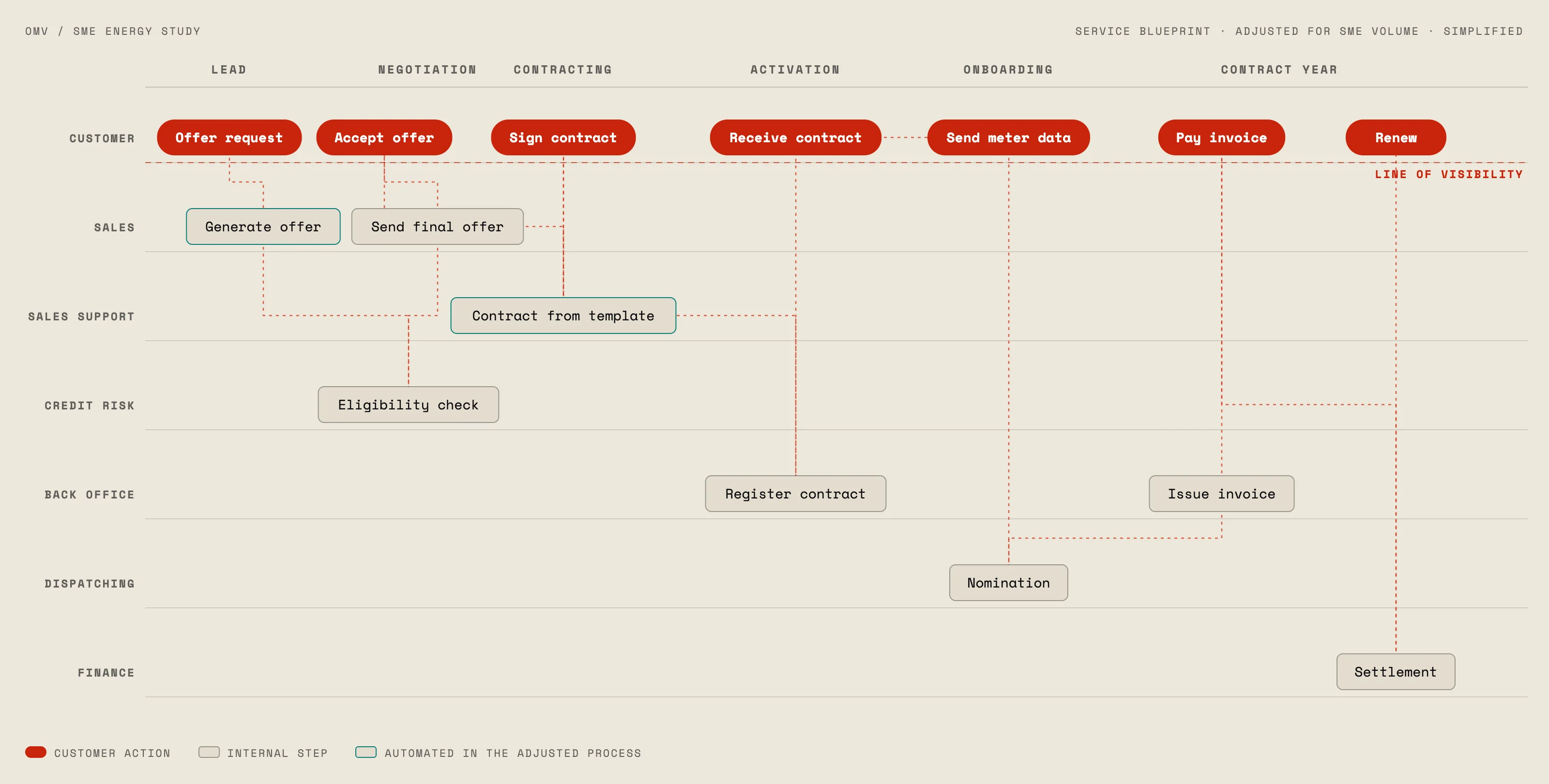
We then spent weeks working through those changes with the affected departments. I built a Value Proposition Canvas around OMV personnel’s own jobs, pains, and gains, then ran workshops to design an internal platform able to carry the new customer base: automating repetitive work like offer creation, standardising contract templates, and connecting the sales platform to the systems behind it.
Turning the findings into a working product.
The research pointed at a digital platform supporting customers through the whole journey: finding and selecting an offer, signing, onboarding, and renewing. To define it, I went straight to the people it was for.
Rapid-prototyping workshop
The defining moment was a two-day rapid-prototyping workshop with real customers on site: over 20 representatives from companies already working with OMV Petrom, alongside a large group of OMV people from across the business. Participants split into four teams, each taking a different part of the platform: onboarding, offering, contracting and the customer portal’s analytics. Work ran in 60-minute design sprints, each followed by 30 minutes of user testing and feedback with the customers in the room.
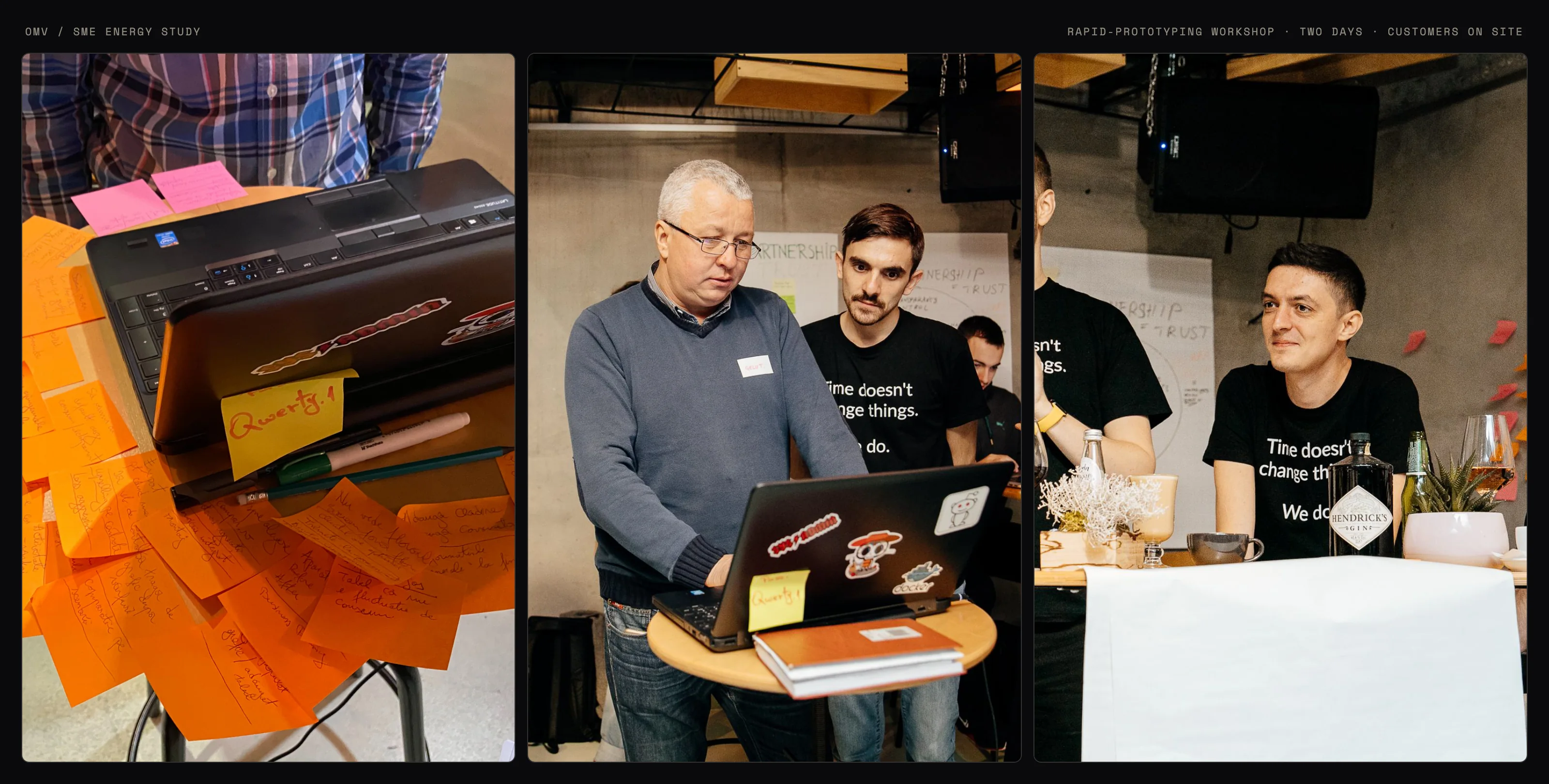
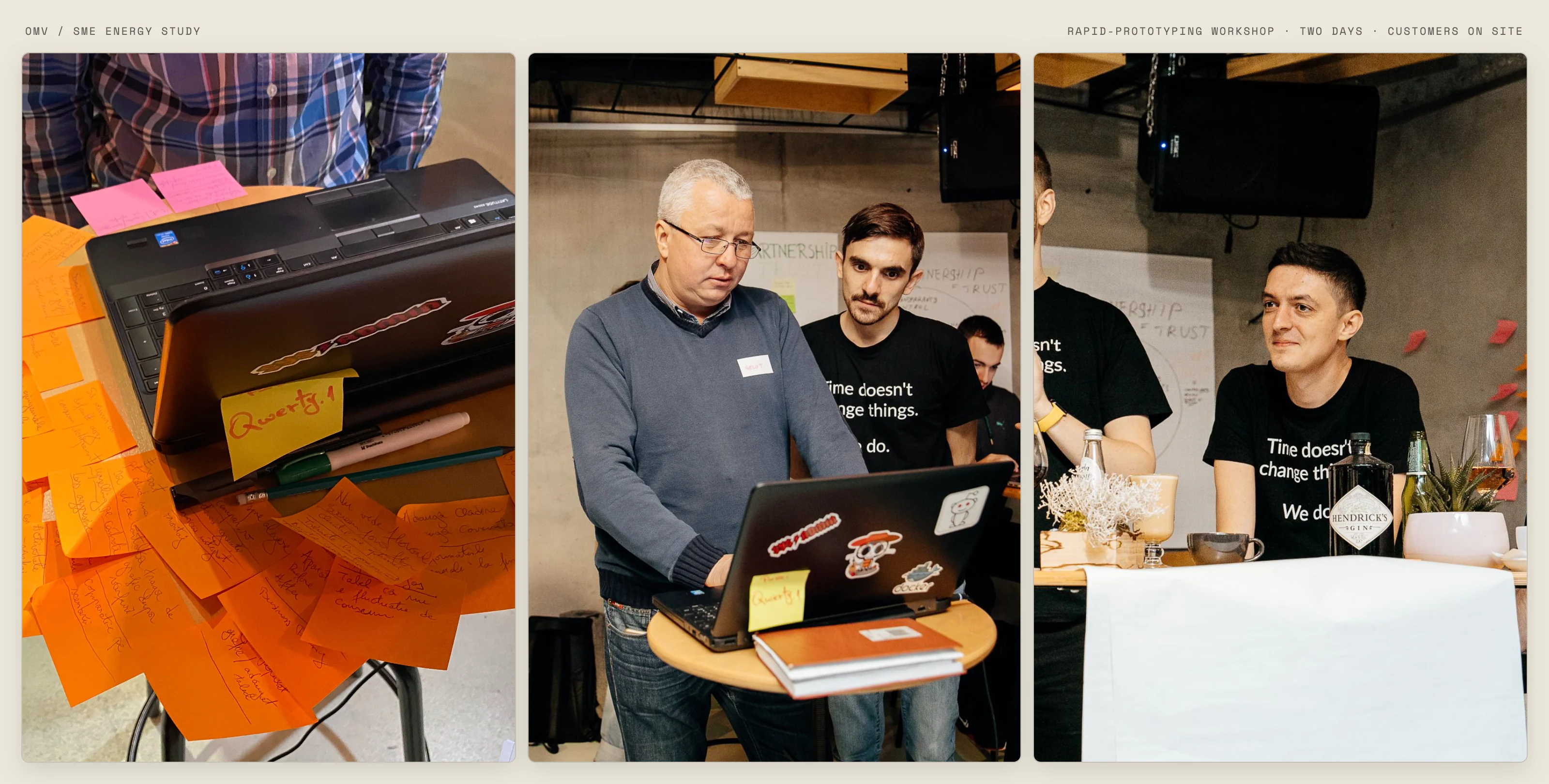
Working directly with customers during prototyping changed the output. Assumptions that looked safe on paper got challenged in minutes, and the offer got sharper for it.
What the workshop taught us
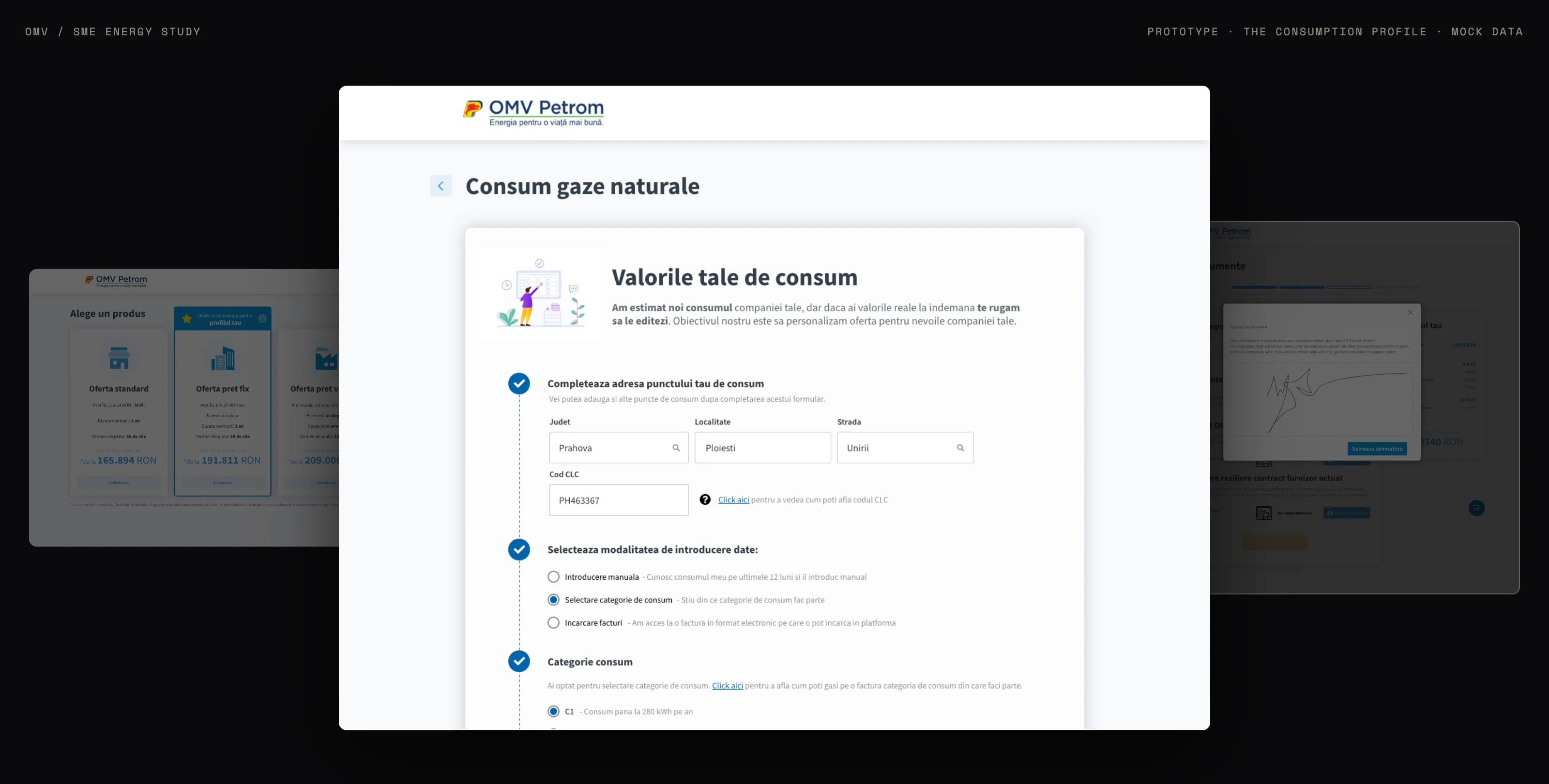
- Activation had to run on data people actually have, so the flow was stripped down to details anyone can read off an energy bill, like consumption categories.
- The instant offer was the biggest relief, since switching suppliers normally takes weeks; receiving an offer and signing the contract on the spot tested as the single strongest feature.
- Bundled services drew real interest, even from customers unsure they’d buy them; for gas consumers, folding the mandatory bi-annual installation checkup into the offer removed a genuine chore.
- The offer bent to how each business uses energy, with installment plans that flatten the year for businesses that heat with gas and face high winter bills, and a pay-what-you-consume model for manufacturers using energy as raw material.
The prototype
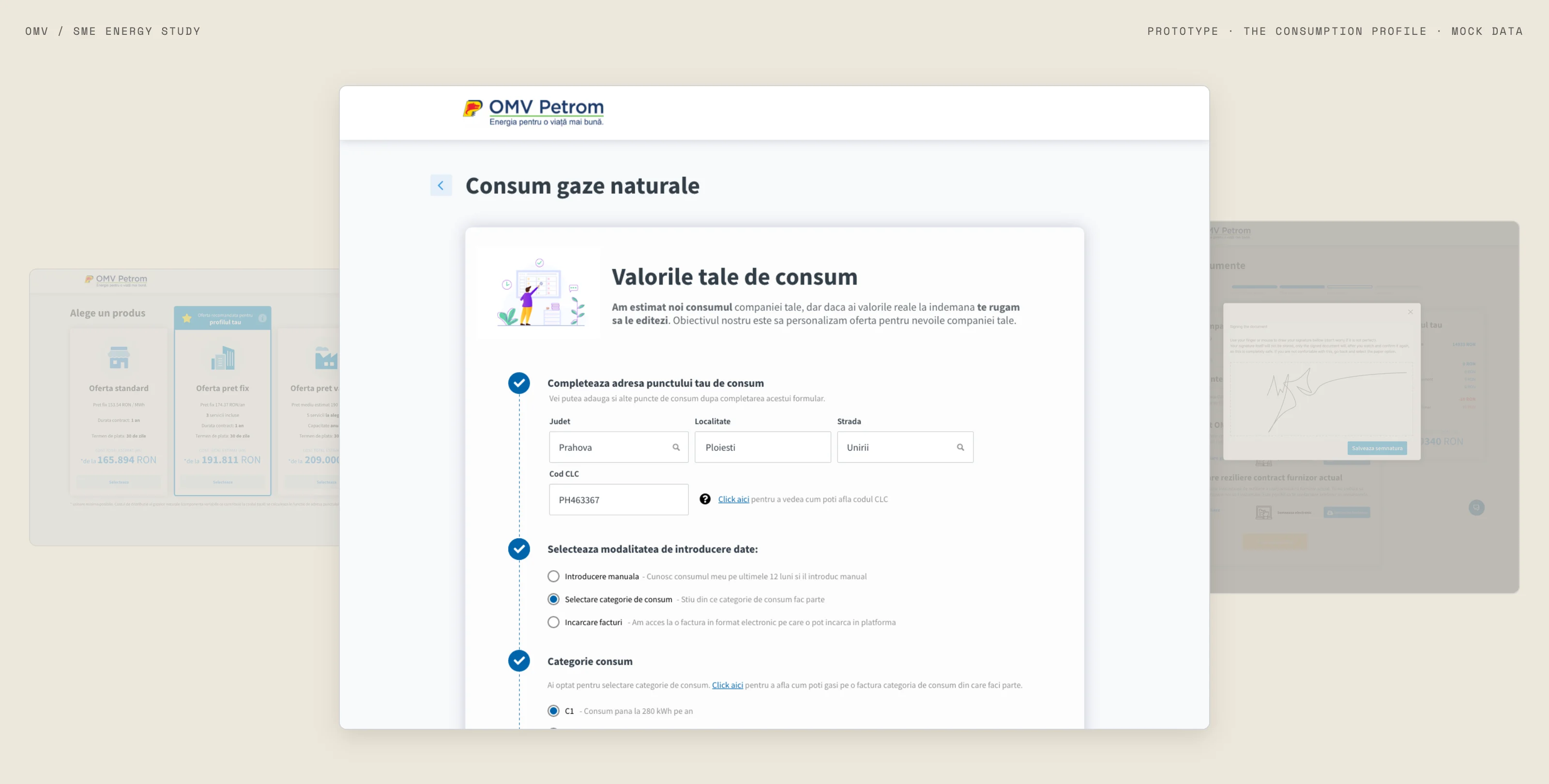
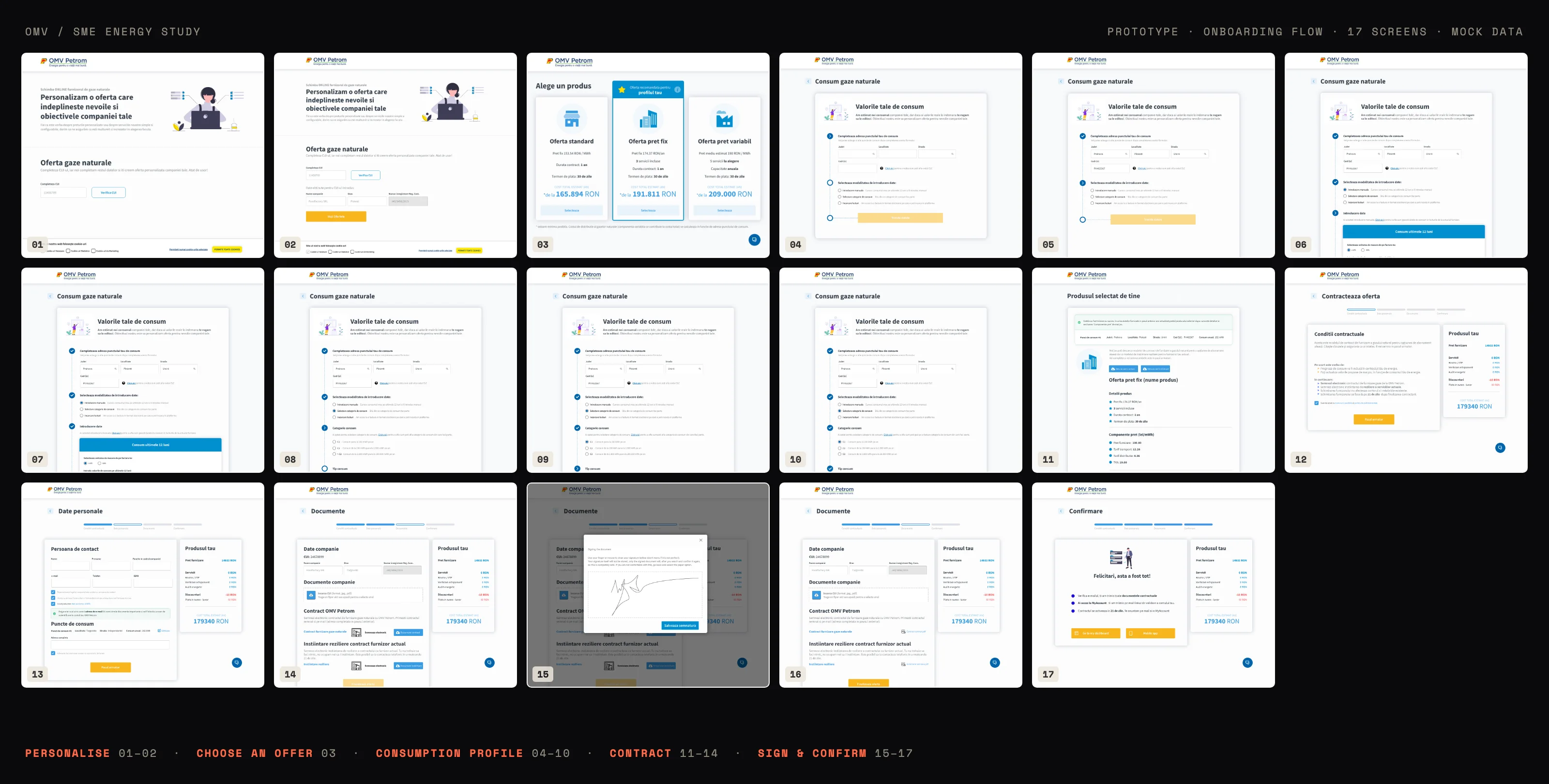
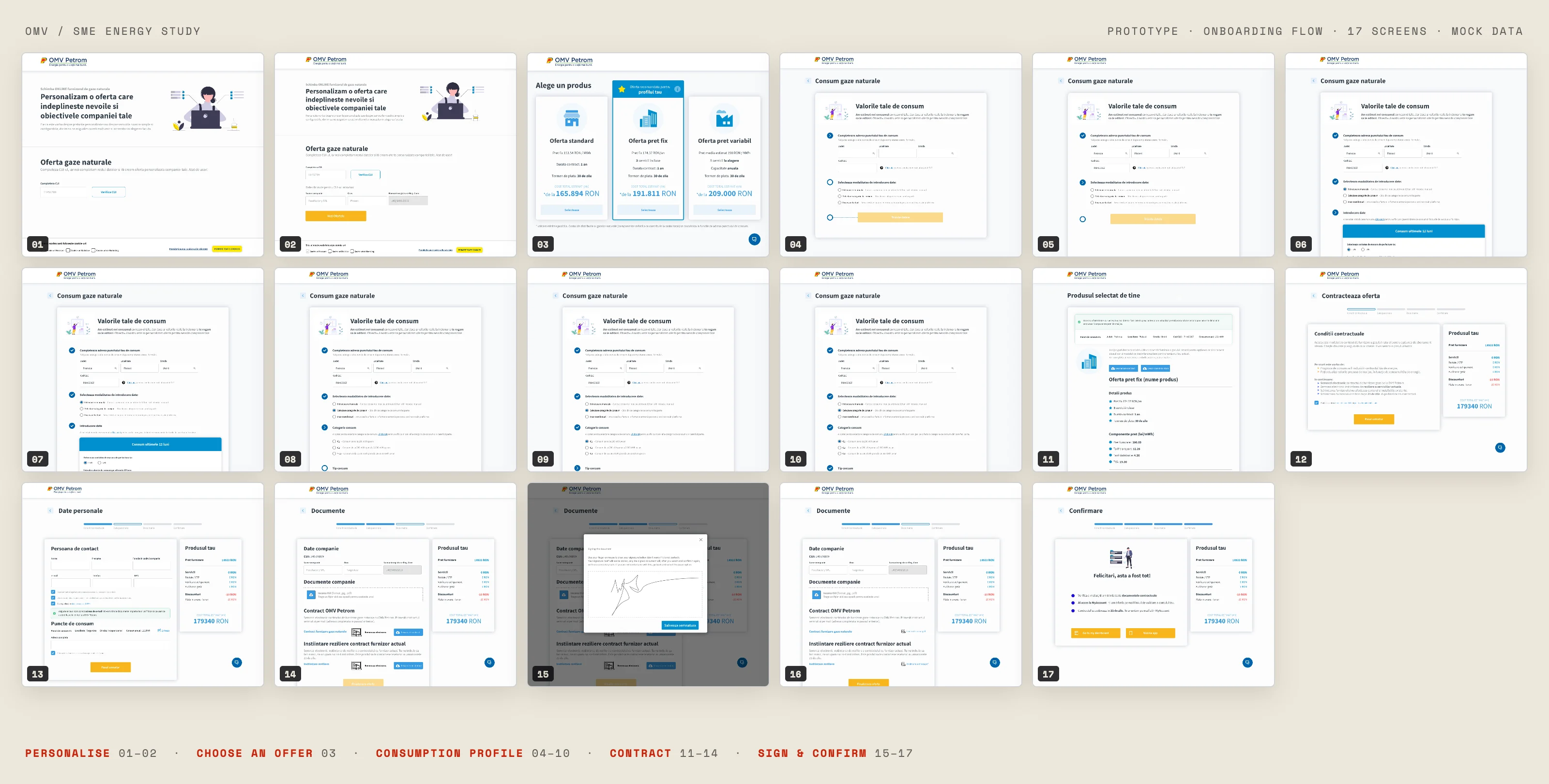
The work resolved into a full working prototype of OMV Petrom’s SME energy offer: a self-service flow where a business describes its consumption and needs, gets tailored offers on the spot, and signs without the weeks of back and forth. Alongside it, the workshop produced a complete onboarding flow and a first draft of the customer portal, the hub where users track consumption data and manage their contracts.
What the project proved.
- Offer to contract in minutes, where instant offer generation cut the path from offer request to signed contract from several weeks. In testing it was the feature customers responded to most, and none of the competitors had it.
- The real demand sat behind the price, which OMV’s early survey had called the deciding factor; the interviews and the phone study found trust, predictability, bundled services, and digital self-service underneath it, and the product was designed around all of them.
- A simpler path through the bureaucracy, after working with OMV Petrom’s process team to simplify and accelerate the subscription process for energy products.
- A milestone for the organisation, because developing the product showed OMV Petrom what streamlining and digitising internal processes could do, and that a company built around enterprise deals could design for a market it had never served.
Four months of research produced a validated case for a new business line, a working prototype of the offer, and the design of the internal platform to support it. OMV Petrom went on to build and launch the product on that definition.