Product & Visual Design · 2019
One home for esports fans: discover, track, and watch every event in one place.

Competitive gaming is enormous and completely fragmented: events scattered across organizers, streams, and calendars. ReadyUP was built to be the single hub where fans discover tournaments, follow their teams, and never miss a match, with a tools layer for the organizers and orgs who run the scene.
The audience is hundreds of millions strong, but being a fan means keeping a dozen browser tabs open to track every detail. ReadyUP’s job was to make following esports feel like one consolidated experience.
From a dozen tabs to one home for esports.
The whole story, top to bottom. Open any step for a quick deeper read, or jump straight into the full section.
-
01
ReadyUP is one place to discover tournaments, follow teams, and watch matches across every game, with a tools layer for organizers and esports orgs. Built in 2019 and launched with ESL and Collegiate StarLeague listing their events.
-
02
Schedules buried on organizer sites, streams split across platforms, results chased through social feeds, no reliable way to never miss a match. The bigger the scene gets, the harder it is to follow. Read the full section →
-
03
Fans follow specific teams as much as the games themselves, and don’t want to miss what matters. That single frustration became the brief: nobody should miss the moment. ReadyUP had to turn following the esports scene from active effort into something the product does for you. Read the full section →
-
04
Discover every event in one feed, track teams with calendar sync and notifications, watch streams in context, plus community, tickets and merch, and viewing-party tools. Read the full section →
-
05
A hub only works if the events are real and current. Every fan-facing feature had a matching question on the organizer side: who keeps this accurate, and why would they bother to? ESL, a major esports organization, partnered with ReadyUP and listed its events on the platform. Read the full section →
-
06
Every component was designed in all of its states before any screen used it. The clearest example is the fixture card: one card, four states (TBD → Upcoming → Ongoing → Finished). Read the full section →
-
07
ReadyUP set out to do for esports what a great sports app does for traditional sports: make following the thing you love feel effortless. After launch the work stayed fan-driven: the community that grew around it ran user tests and pitched the features that went into the roadmap. Read the full section →
The opportunity
A massive audience with no home base.
Esports rivals traditional sports in scale, yet the fan experience is held together with tabs and guesswork: tournament sites for schedules, Twitch and YouTube for streams, social feeds and Discord servers for results, a separate calendar to remember it all. The bigger the scene gets, the harder it is to follow.
We ran surveys and interviews with gamers and esports fans from all over the world, sourced through Discord and Reddit. When asked how they watched their team’s latest important match, nearly half of the fans had missed the stream: a quarter forgot the date and time, and a fifth never knew the team was playing in the first place. Half of the people interviewed say they watch every week, and more than half say they have been watching esports for over five years, so this is a committed audience losing matches to logistics. Almost eight in ten prefer watching with friends, which no schedule page serves at all.
Before ReadyUP
- Schedules buried on organizer sites
- Streams split across platforms
- Results chased through social feeds
- No reliable way to “never miss a match”
With ReadyUP
- Every event, searchable in one place
- Watch & track from a single hub
- Follow teams; results come to you
- Calendar sync + notifications
Grounded in how fans actually watch.
The research asked three plain questions: what pulls fans in, what frustrates them, and what would make them show up more. The recurring themes were simple: fans want one reliable source, they follow specific teams as much as the games themselves, and they don’t want to miss the moments that matter.
“Sometimes I find out my team played after the match is over. By the time I hear about it, I’ve already missed it.” esports fan, research
Two more things came up in nearly every conversation. Following is selective: fans keep up with the major events and lose interest in the rest of the competitions. And watching is social: friends set up watch parties on private Discord servers, because the Twitch chat at big events runs too fast to take part in, and the conversation there is chaotic and meme-focused  rather than match-oriented. Both shaped the platform, the calendar and notifications for the first, the viewing-party tools and community features for the second.
“There are a lot of Dota 2 competitions throughout the year, but I can’t keep track of all of them and usually end up watching just the majors.” esports fan, research
“On large events the chat on Twitch is way too erratic to follow, so I hide it. It’s a pity, because I like to interact with others.” esports fan, research
That single frustration became the brief: nobody should miss the moment. ReadyUP had to turn following the esports scene from active effort into something the product does for you.
The platform
Discover, track, watch, and belong.
The product is organised around what a fan actually does, end to end.
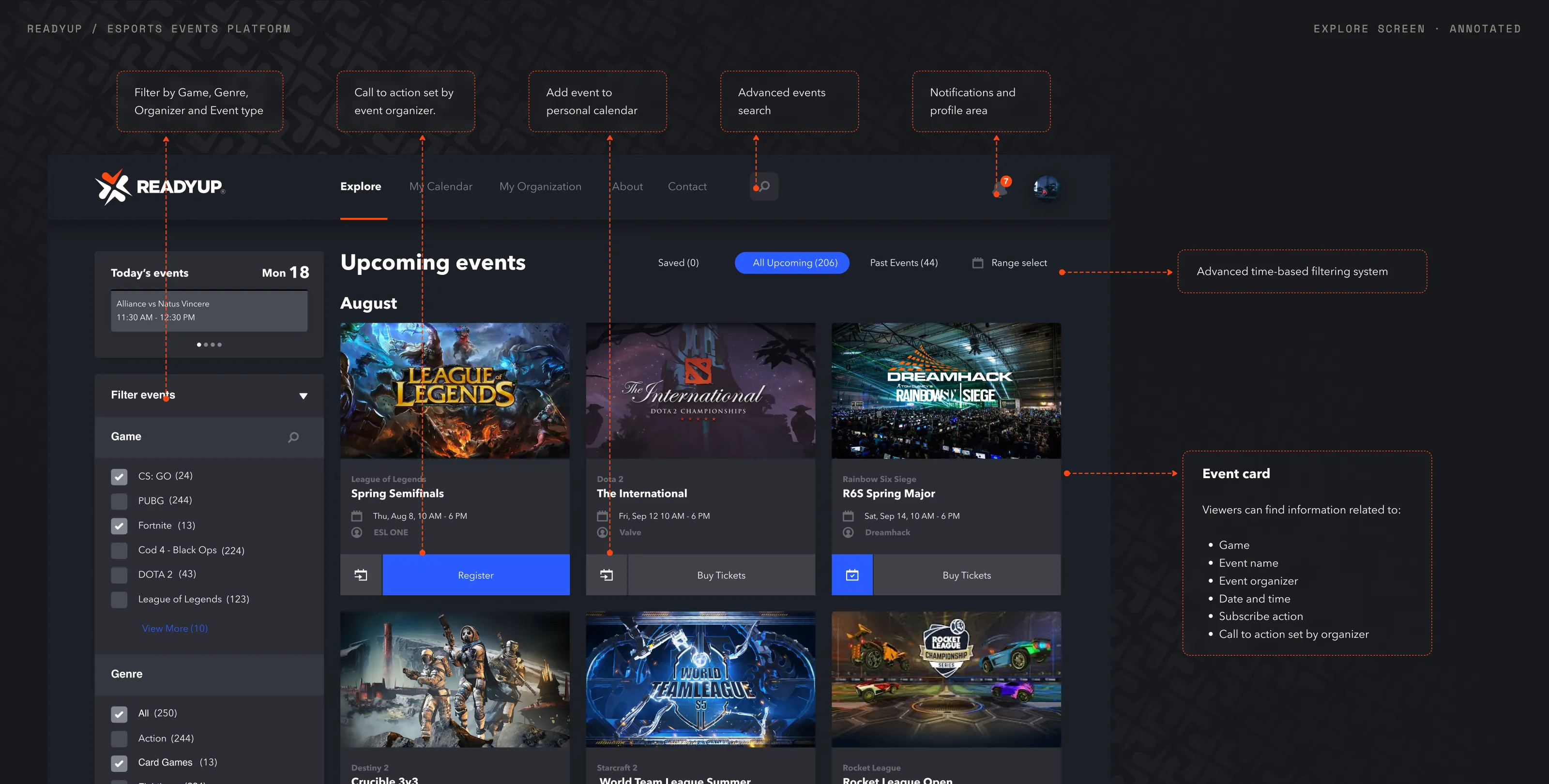
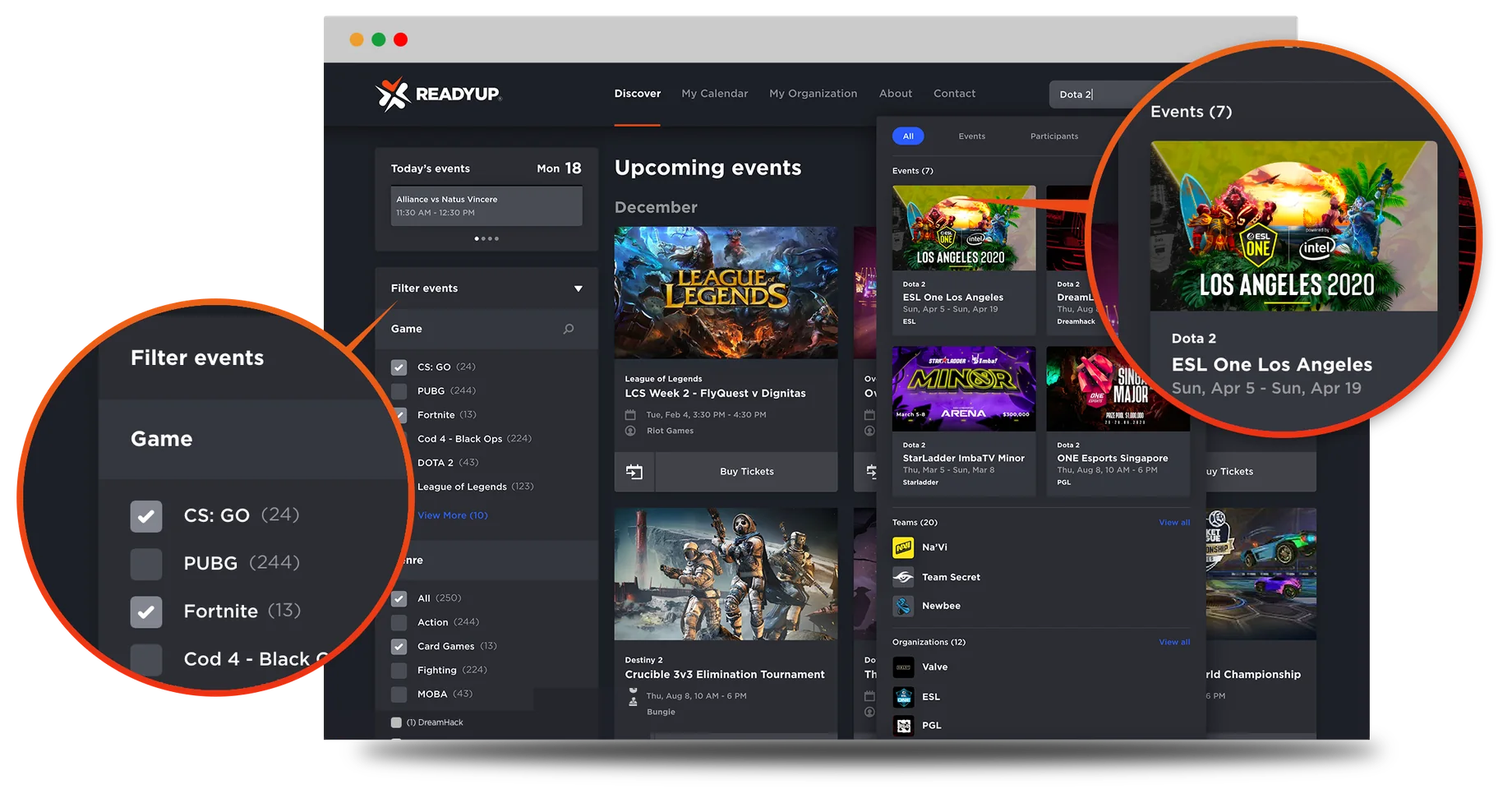
Find every event
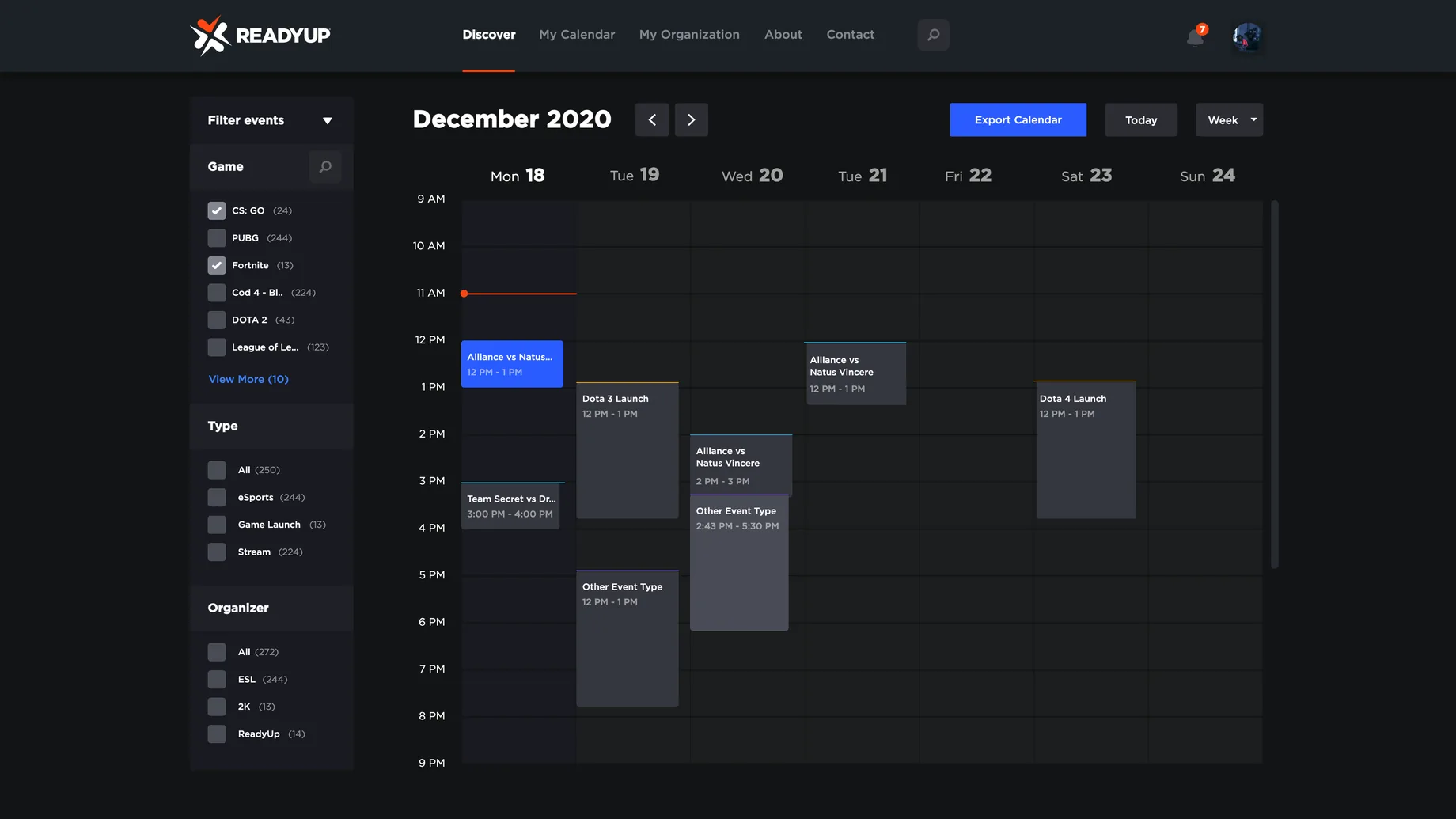
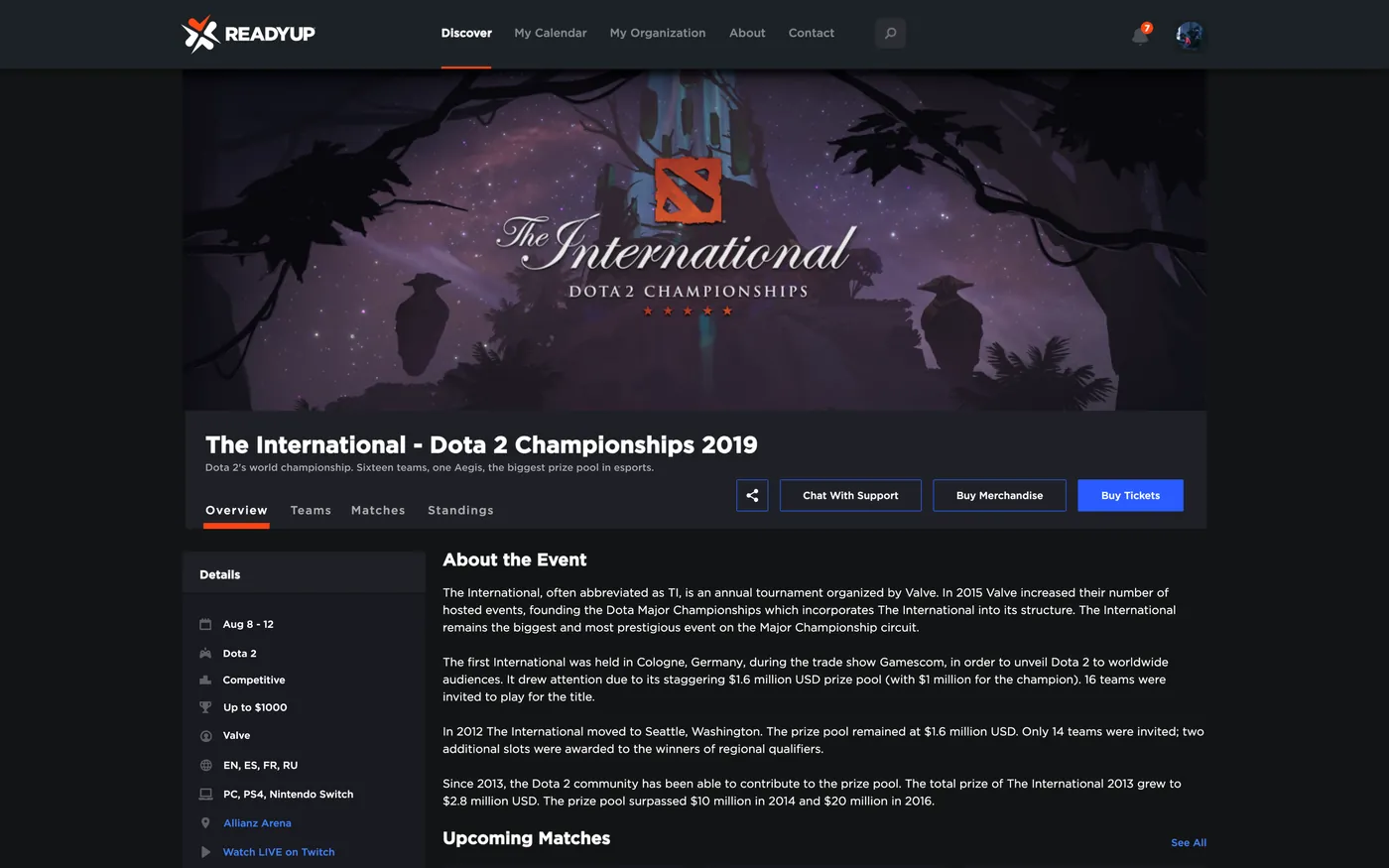
Discovery is one search across events, teams, and organizers, with live filters for game, genre, and event type. The magnified detail shows an ESL One event surfacing straight from search.
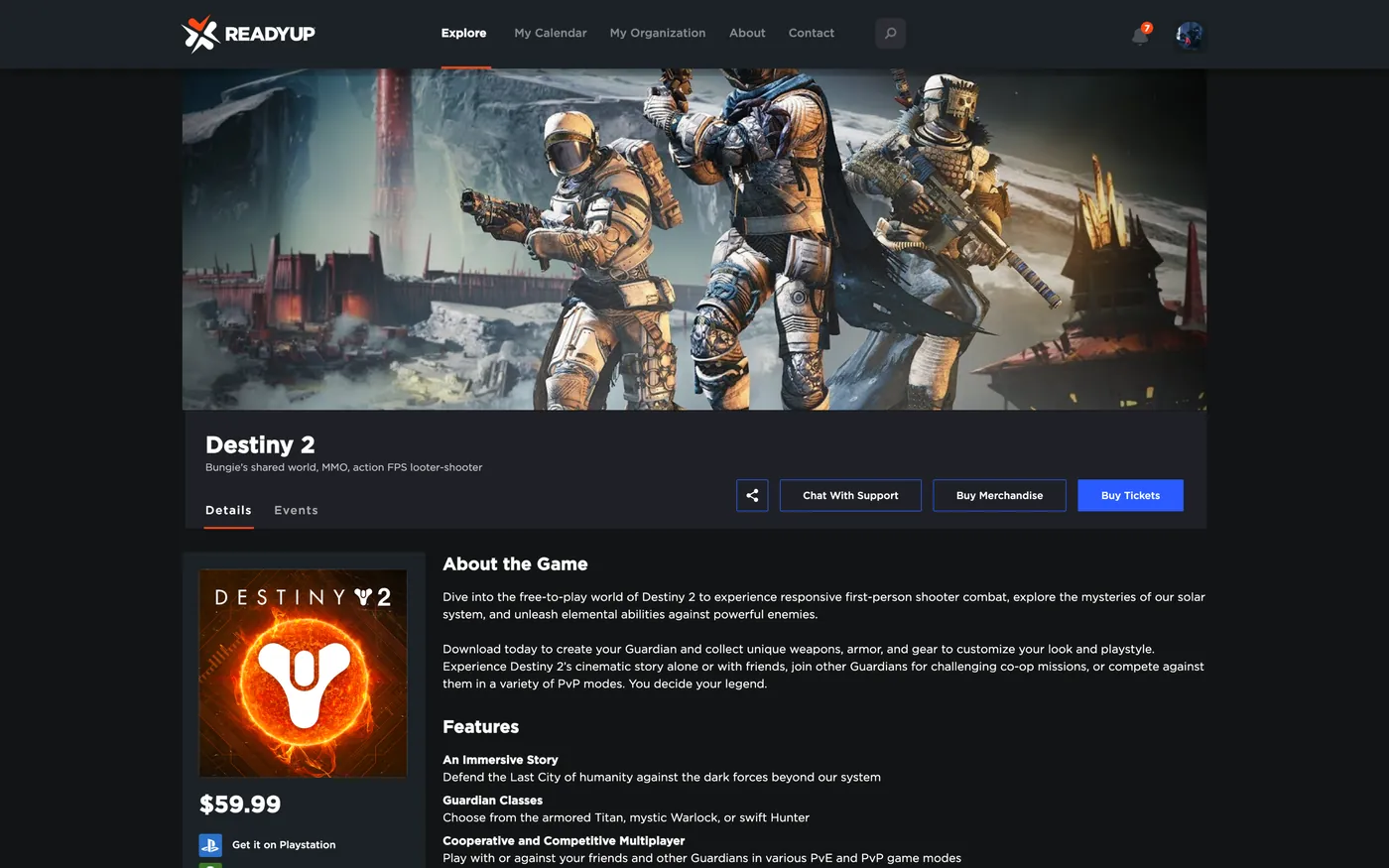
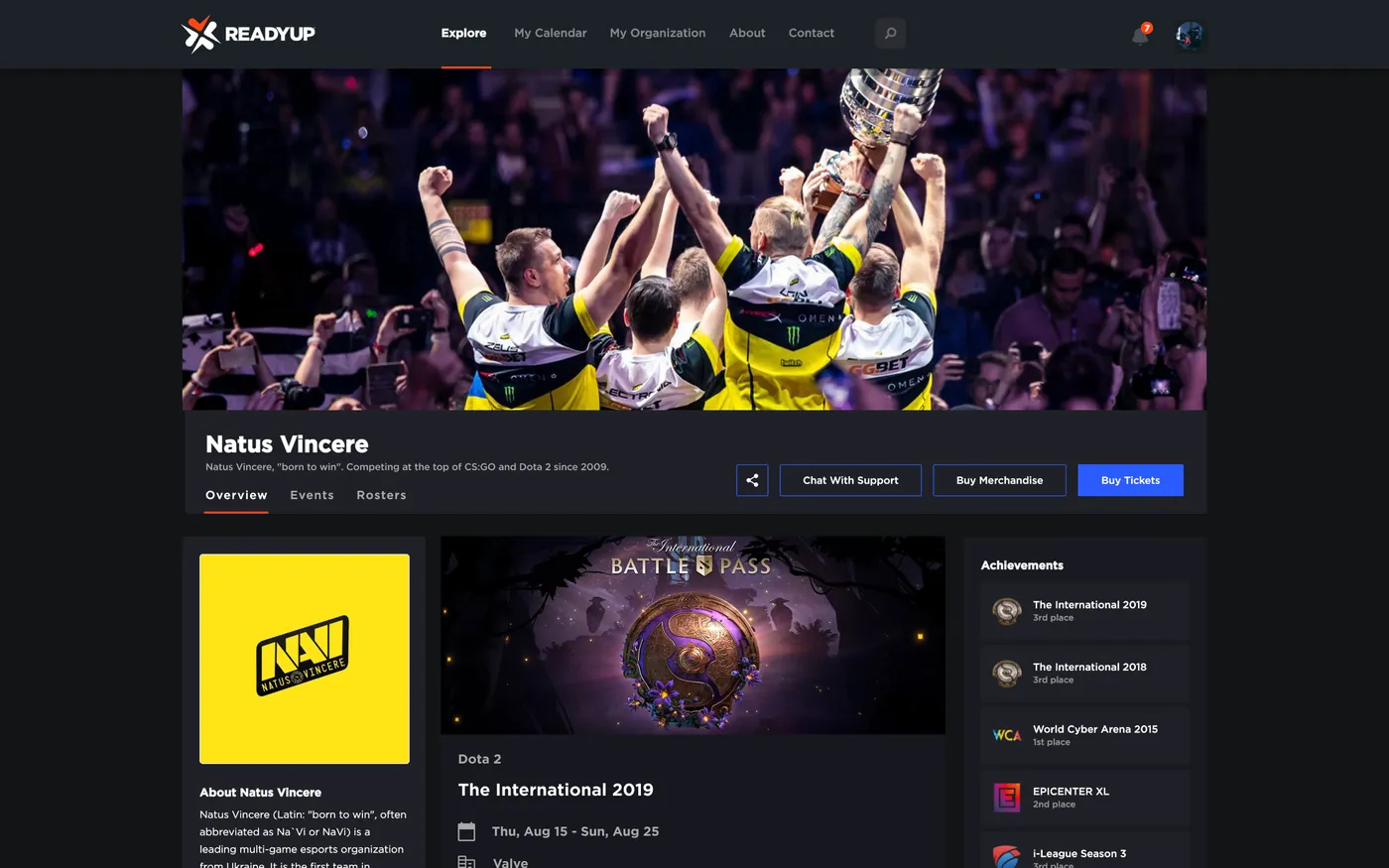
Never miss a match
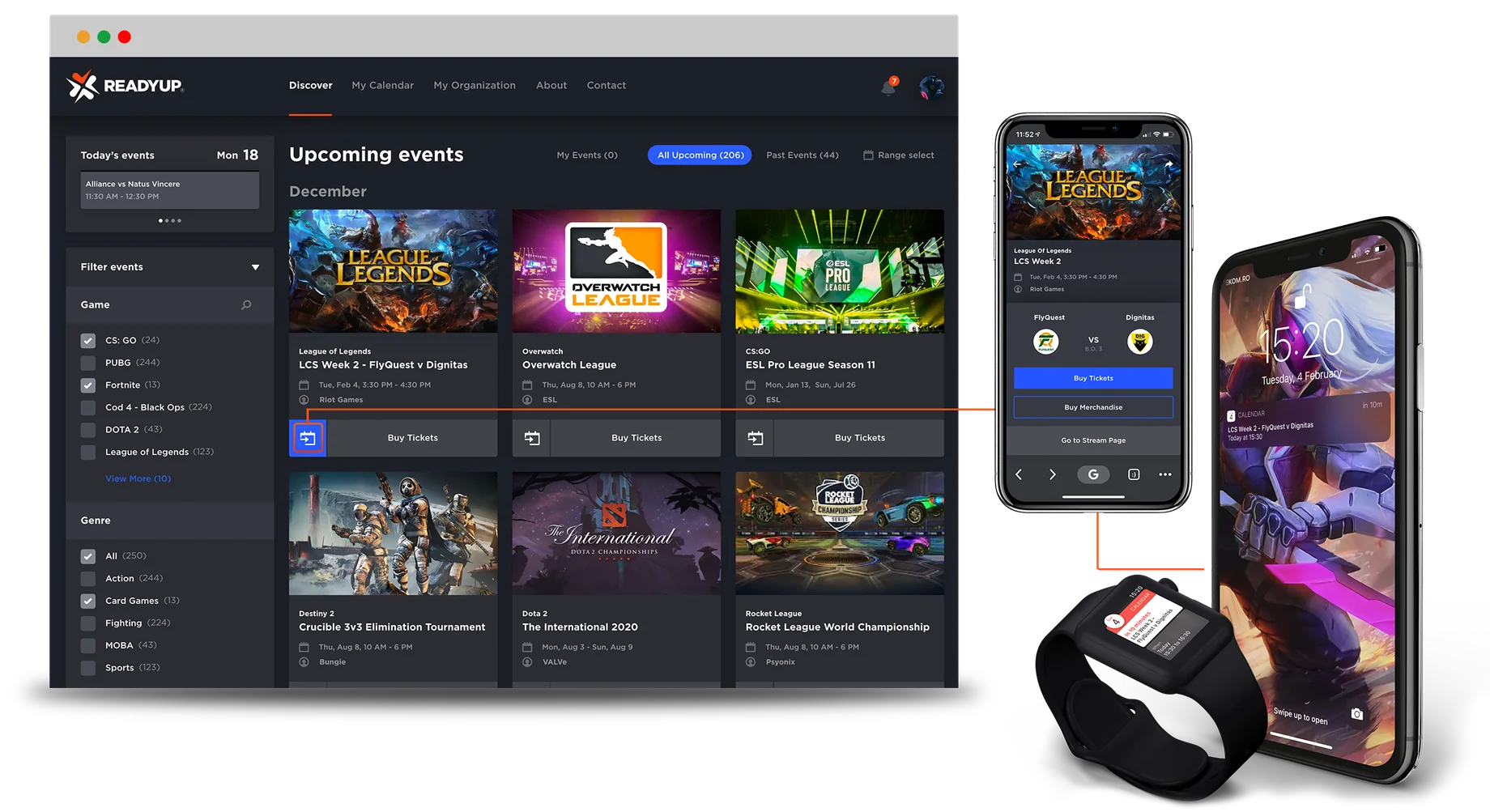
Following a team is one click on an event card; the match lands in your own calendar, and the reminder reaches your phone and your watch before it starts.
Join in
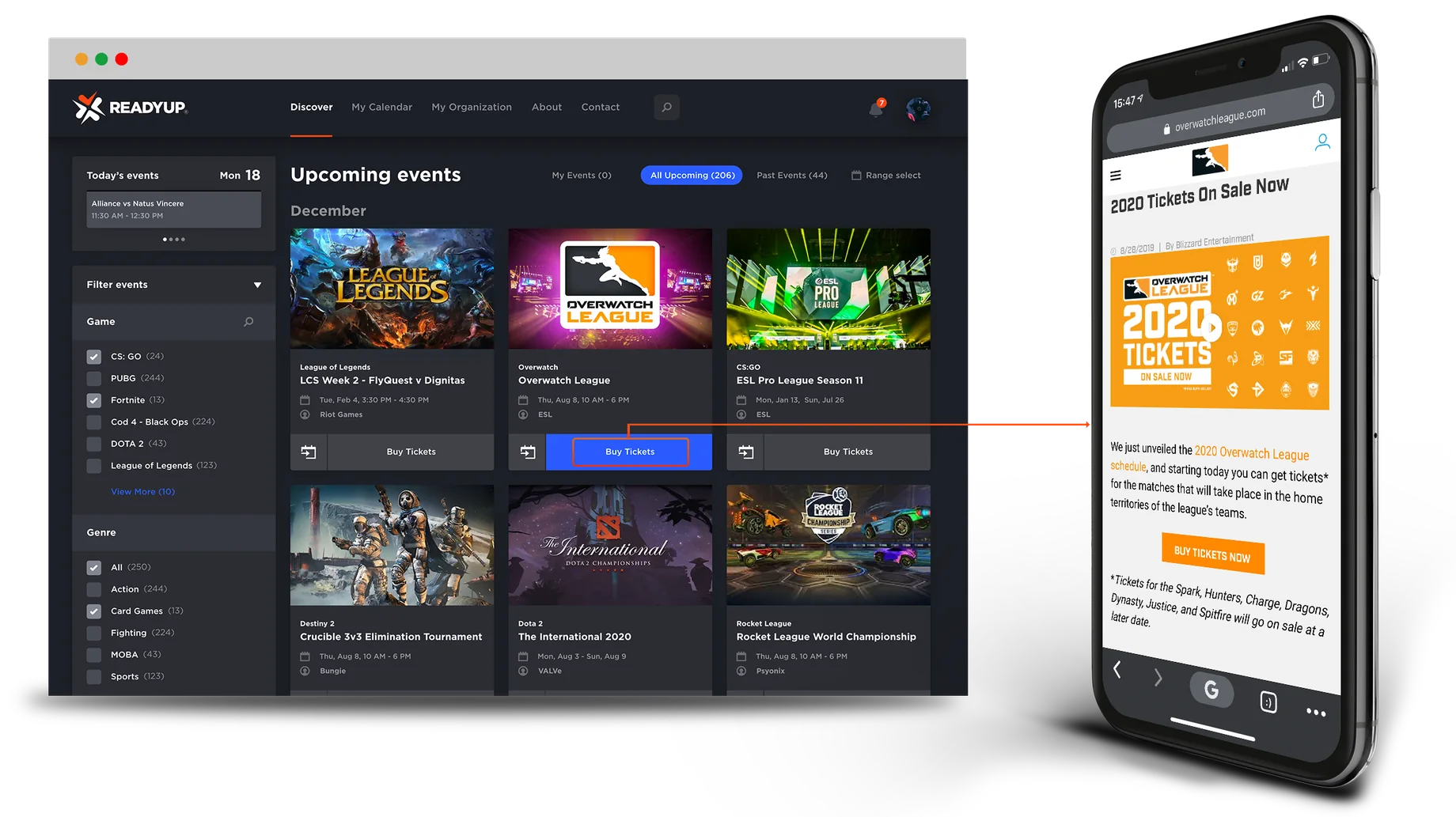
Tickets live on the event itself. The buy action routes to the organizer's ticket page, so going to a match starts in the same place as discovering it.
Two sides of the platform
Fans on one side, the people who run the scene on the other.
A hub only works if the events are real and current. So ReadyUP is two-sided. Fans get the experience above; event organizers and esports orgs get an admin layer to publish events, manage teams and rosters, run widgets, and reach an audience that’s actually looking for them. ESL, a major esports organization, partnered with ReadyUP and listed its events on the platform.
| Audience | What ReadyUP gives them |
|---|---|
| Fans | Discover, track, and watch every event; follow teams; calendar sync; notifications; community. |
| Event organizers | Publish and manage events, widgets, and content, in front of an engaged audience. (events at the scale of Riot, Valve, and Blizzard.) |
| Esports orgs / teams | Manage teams, rosters, and social presence; reach and reward their fans. (the world of NaVi, Team Liquid, Fnatic, FaZe, Cloud9, G2.) |
The Data API
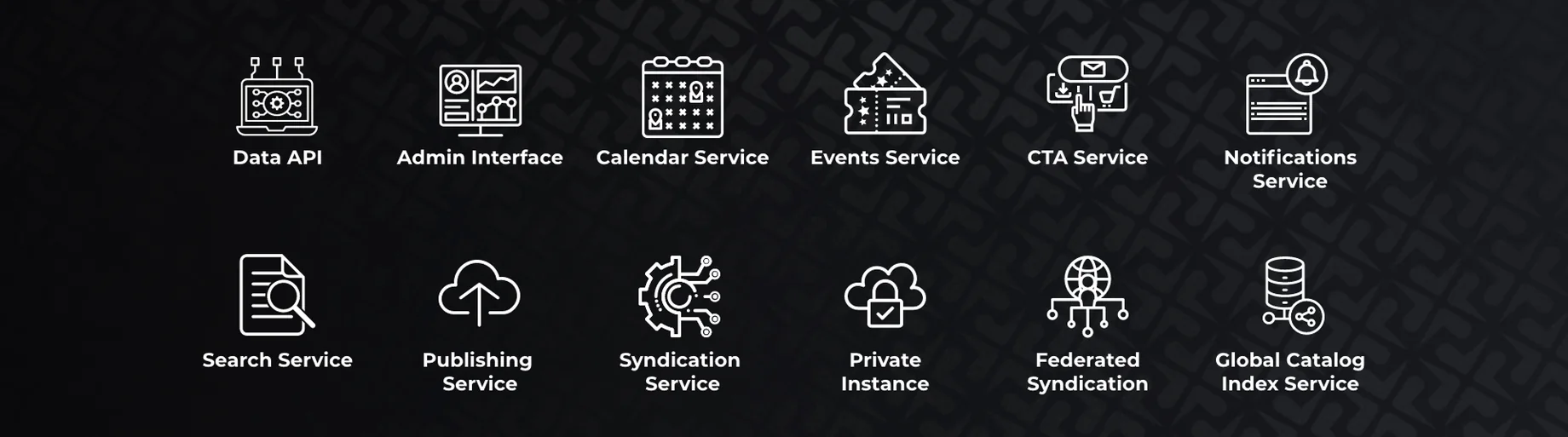
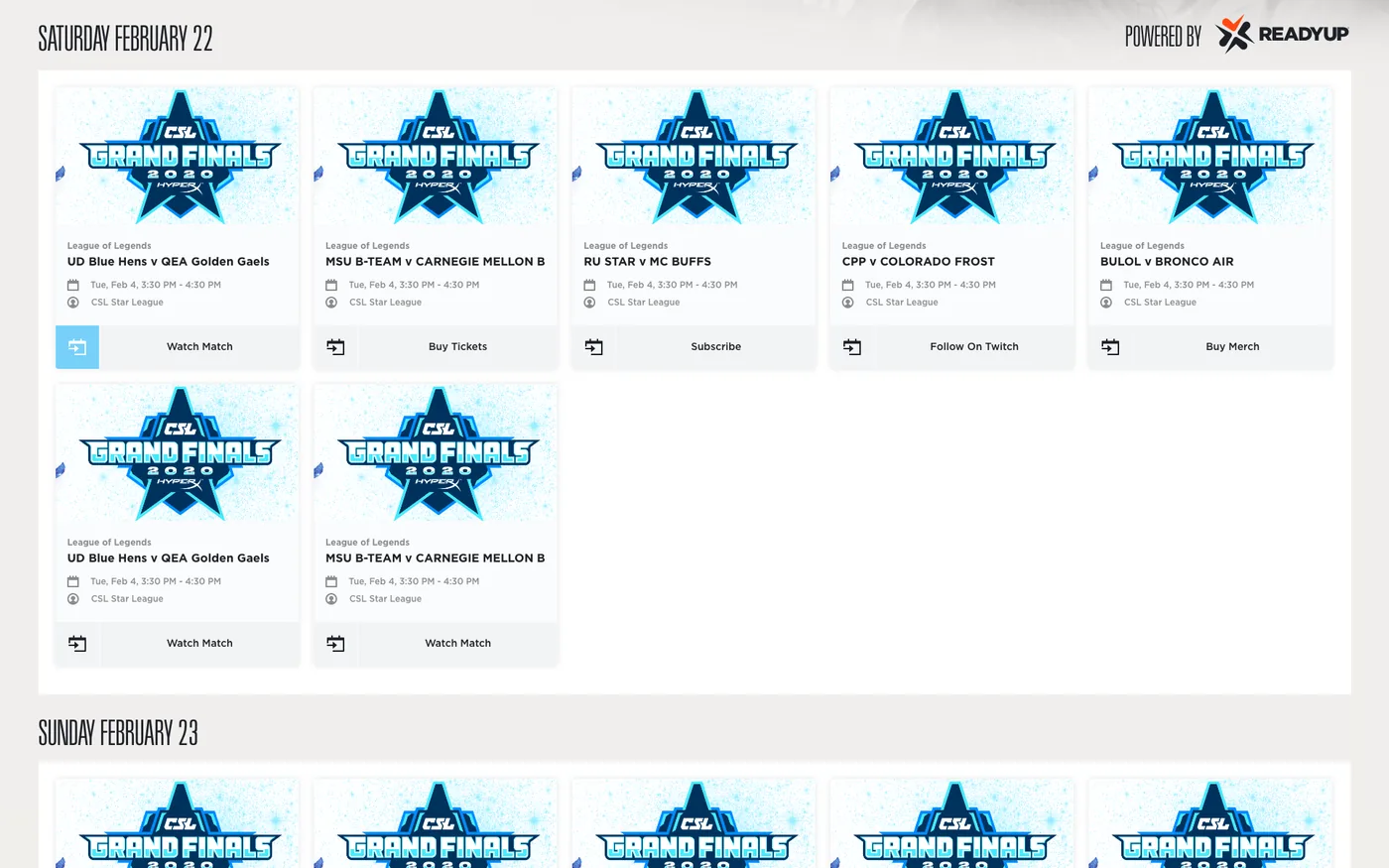
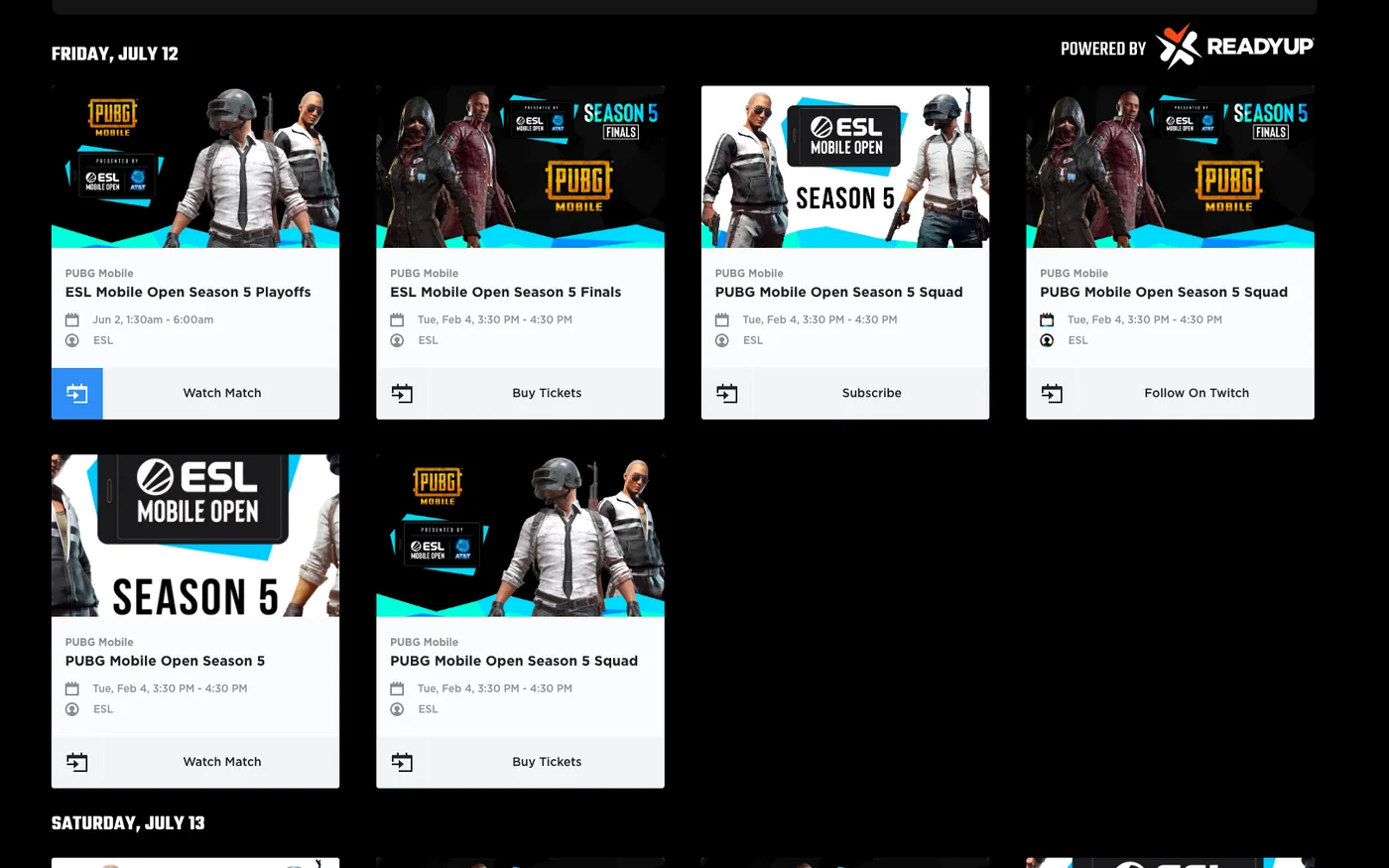
The organizer side went further than a console. The ReadyUP Data API exposed the same domain model, collections, organizations, games, events and series, widgets and topics, so a partner could publish once and syndicate everywhere: their own site, mobile, social, a private instance, or another ReadyUP instance through federated syndication. Twelve services sat on top of it, from calendar and notifications to search, publishing and a global catalog index. ESL and Collegiate StarLeague ran their schedules on their own pages this way, with the ReadyUP cards underneath.
The organizer console
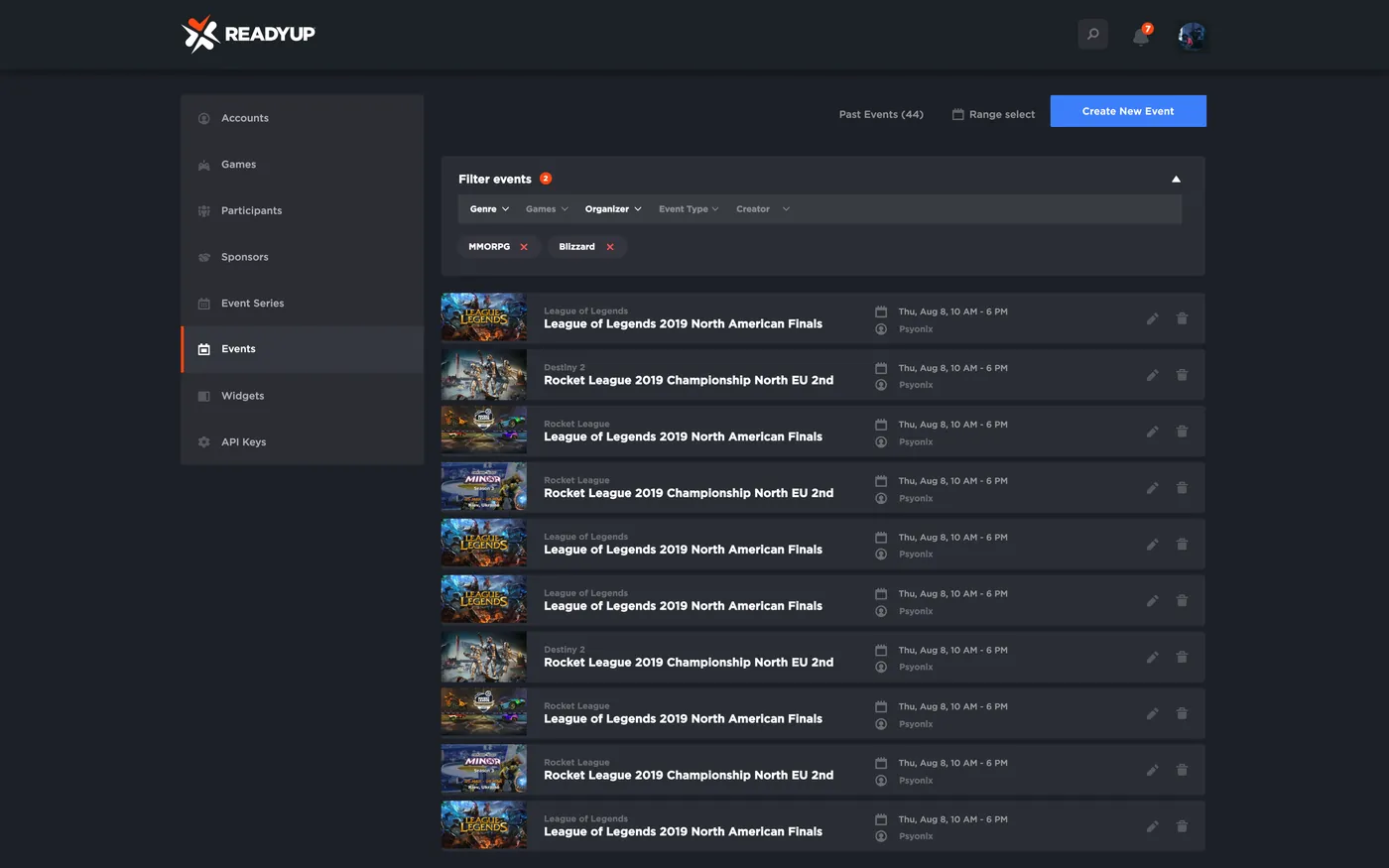
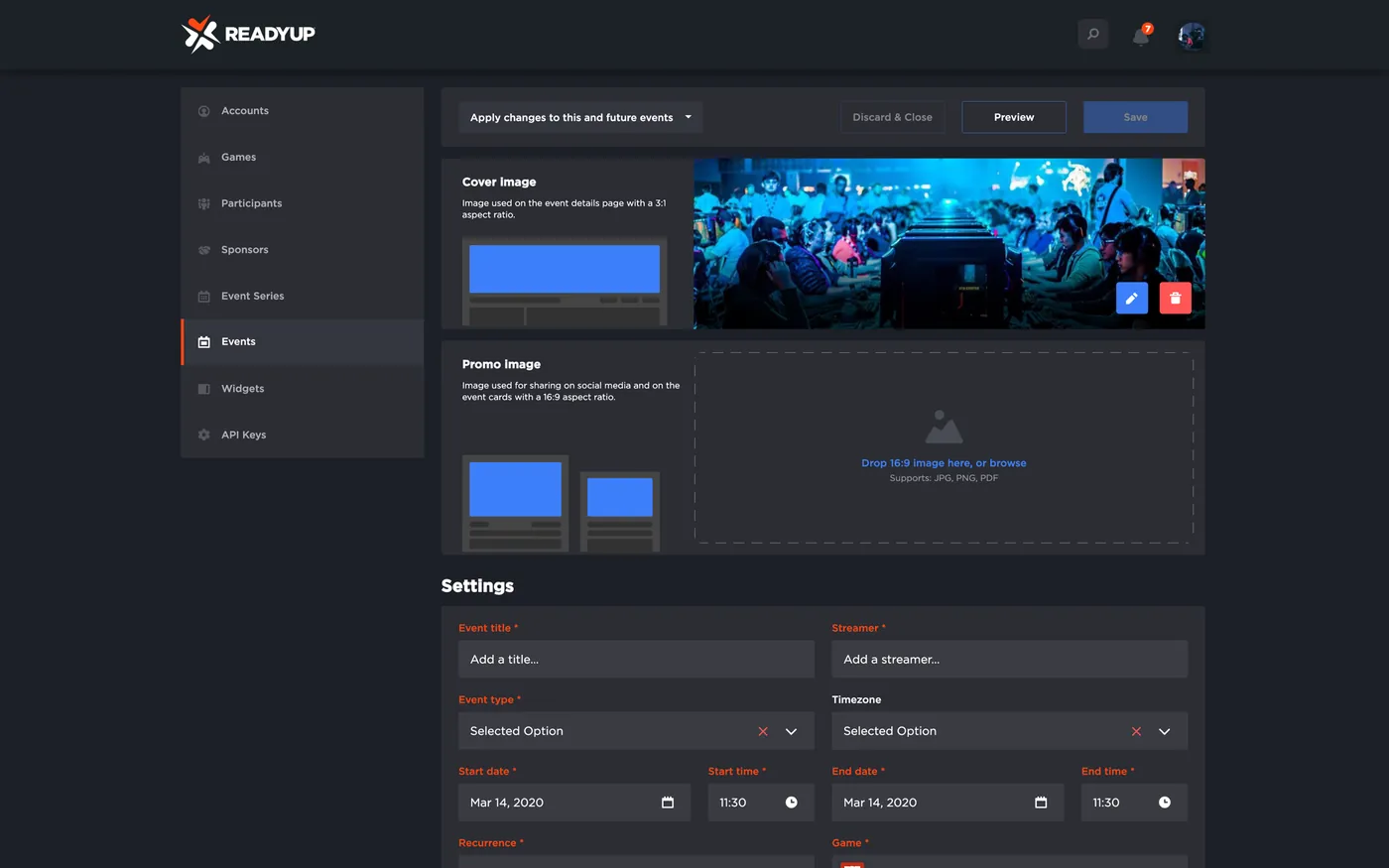
Designing for two audiences at once meant every fan-facing feature came with a question from the organizer side: who keeps this accurate, and why would they bother to? Calendar sync only works if organizers publish schedules early, so the editor asks for dates and streams up front and the widget pays them back with traffic to their own site. A follow button only works if rosters stay current, so rosters live on the team page the org already promotes. Notifications are only welcome when they come from the source, so organizers send them from the same console that lists the event. Every fan feature was something an organizer wanted too.
Design system & identity
A bold, consistent system for a content-dense product.
ReadyUP spans a lot of surfaces: feeds, event pages, profiles, an admin console, hundreds of screens in all. Keeping that volume consistent came down to a strict component library on top of the dark identity: every component designed in all of its states before any screen used it.
The direction was tested before it was locked. The type system was built out three ways, in DM Sans, Montserrat, and Inter, and compared on real screens; several colour themes were developed far enough to compare properly, and blue won. Only the winning direction went into the component library.
The match-fixture system
The clearest example is the fixture card: it has to read instantly whatever state a match is in, so it was designed once, with four states:
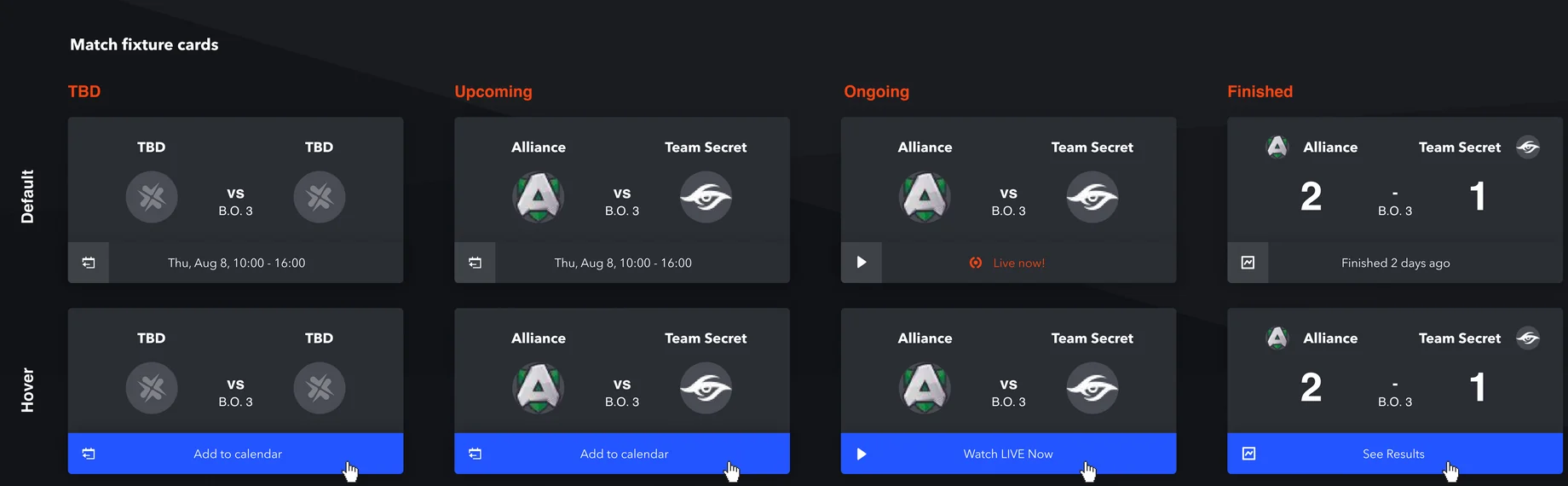
The same rule applied across the library, which kept new screens quick to assemble and hard to get wrong. The fixture cards also went out through the syndication program, so the same design, with slight colour changes, appeared on partner sites.
The outcome
From a dozen tabs to one place to be a fan.
ReadyUP went live and was well received. ESL and Collegiate StarLeague came on board as partners and syndicated their schedules through the platform. After launch the work stayed fan-driven: an active Discord community formed around the product, ran user tests, and fed feature requests straight back into the roadmap. The community was managed by Greenskull, a well-known gaming streamer.
- A single home for discovering, tracking, and watching competitive gaming, built around how fans actually follow the scene.
- A two-sided product that stays accurate because organizers and teams have real reasons to keep it current.
- A distinctive, systematic design language, loud where esports wants it and steady across a content-heavy product.
ReadyUP set out to do for esports what a great sports app does for traditional sports: make following the thing you love feel effortless, and like it all lives in one place.